The landscape doesn’t reveal itself clearly at first. It gathers through layers that shift as you move. A shape appears, then softens, then returns again slightly altered. Nothing holds long enough to define itself.
The air carries something heavier here. Not weight exactly, but a presence that changes how distance feels. Light doesn’t settle—it diffuses, then fades, then reappears somewhere else.
It doesn’t stay still. It continues.
Where the Mist Lifts in Fragments
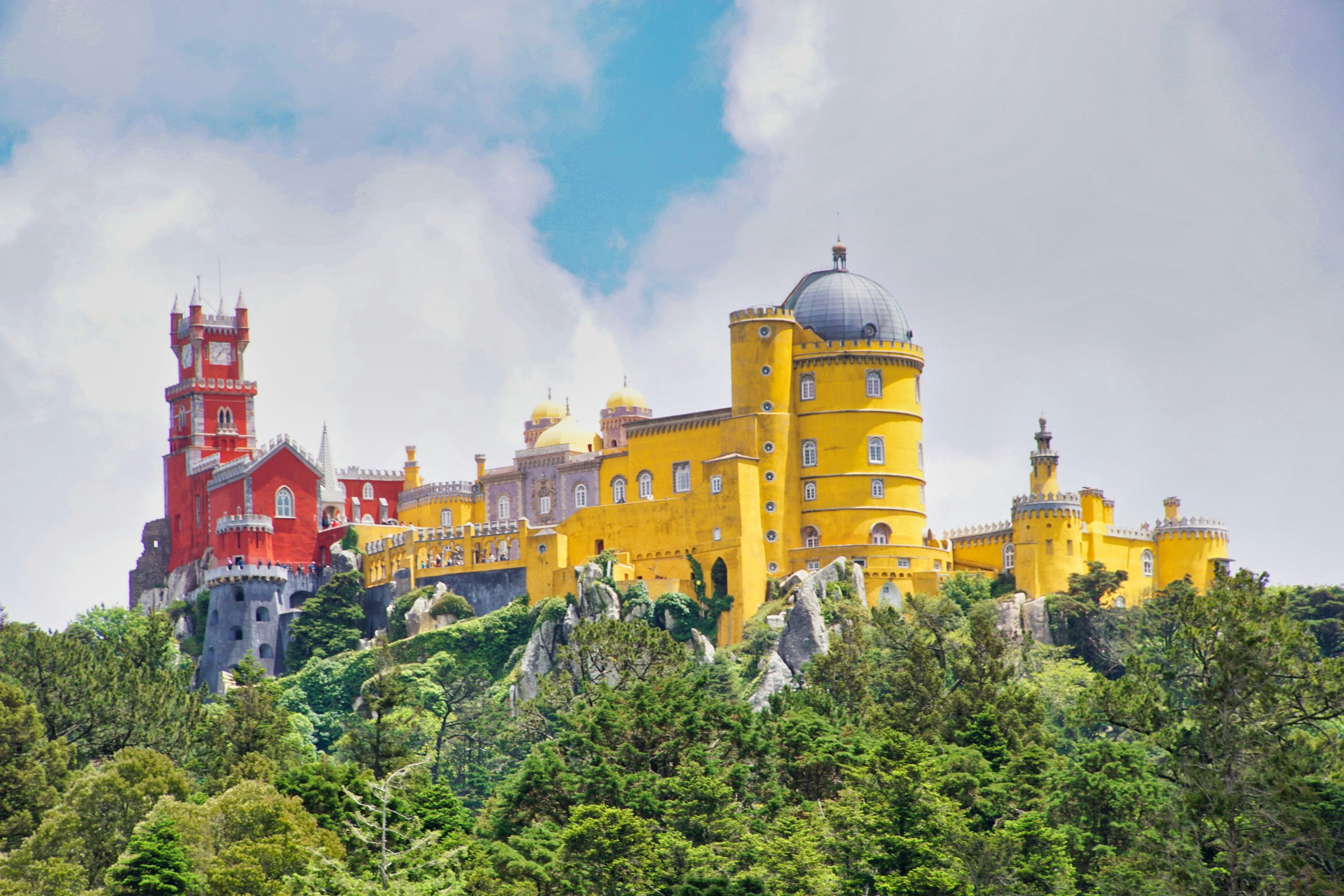
Sintra forms through partial views. The palaces don’t present a full outline. Towers emerge through the mist, then disappear again before you can follow their shape.
The ground feels steady, though the edges of the space don’t stay clear. Paths curve through the landscape without revealing where they lead.
Printed across the edge of a travel booklet, Portugal vacation packages appears among other lines, then disappears as the page shifts slightly.
The scene remains unchanged.

What the Air Conceals and Reveals
The mist doesn’t stay in one place. It moves slowly, revealing parts of the structure, then covering them again.
You notice fragments. A wall, a window, a colour that doesn’t hold long enough to follow.
On a small sign near the entrance, Italy tours is listed among other destinations, then fades into the background without drawing attention.
Nothing interrupts the stillness.

When the Path Turns Without Direction
The route doesn’t stay clear. One path leads forward, then bends, then splits without marking where the change begins.
You move without deciding where to go. The space adjusts around you.
You don’t follow a fixed direction.
The Shift That Happens Gradually
At some point, something changes. The air feels lighter. The mist thins just enough to alter how the space appears.
You don’t notice when it begins. Only that it already has.
The shapes hold slightly longer, though they still shift.
Where the Structure Becomes Defined
Florence gathers differently. The buildings hold their form more clearly. Lines remain visible even as the light changes.
The stone carries detail in a way that doesn’t fade as quickly. Patterns emerge, then continue without breaking entirely.
You don’t see the full structure at once.
What the Facade Holds Steady
The surface feels more consistent here. Edges stay in place longer. Shadows move, but they don’t obscure everything.
You notice details gradually. A carving, a line, a shape that remains visible even as you shift your position.
Nothing disappears completely.
Between Vertical Form and Open Space
Looking upward changes how the space feels. The height is contained within structure rather than stretching outward.
Movement continues below, though it feels separate from what rises above.
You don’t take in both at once.
Where the City Spreads Beyond the Centre
Beyond the central structures, the streets extend outward. The edges feel less defined again, though not in the same way as before.
The rhythm shifts slightly. The space opens, then narrows, then opens again.
You move without deciding where to go.
What Refuses to Settle Into One View
The difference between Sintra and Florence doesn’t organise itself clearly. One feels shaped by shifting visibility, the other by defined structure.
Still, they connect through the way they reveal themselves over time.
You notice it gradually.
What Stays Without Form
It isn’t only the images that remain. It’s the way they appeared. The mist, the stone, the gradual shift between them.
These moments don’t settle into a single image. They remain slightly out of place, though not disconnected.
You notice them later, without knowing exactly when they returned.
Where the Memory Keeps Moving
Looking back, the details don’t return in order. The mist, the structures, the changing space between them don’t form a sequence you can follow clearly.
They appear in fragments. A tower, a facade, a shift in light that didn’t announce itself.
You don’t try to organise it.
It continues beyond what you remember, not as a complete image, but as something still unfolding somewhere just out of view.