
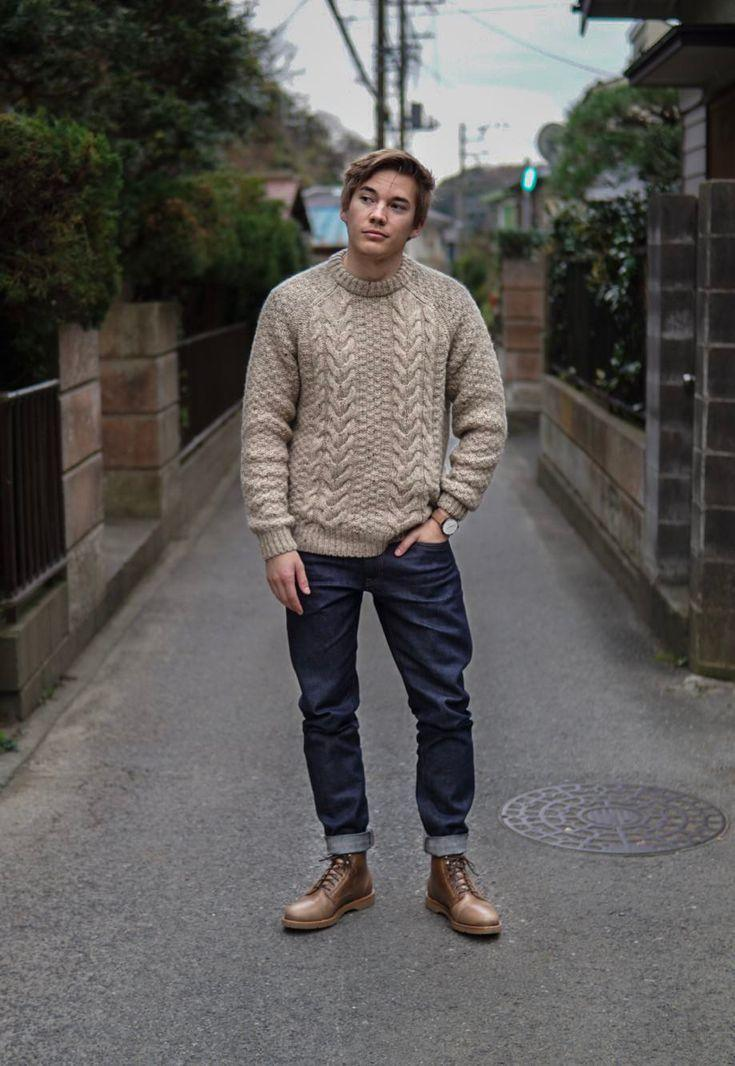
In men’s fashion, it’s a frequent misconception that sweaters are only appropriate for the winter. Practical, warm, and heavy, only to be packed away as soon as the temperature rises.
That presumption is incorrect.
A well-made sweater doesn’t follow a seasonal calendar, especially if it has its roots in traditional knitwear. It adjusts. Roles are changed. Additionally, if you know how to style it correctly, it becomes one of your wardrobe’s most dependable pieces for the entire year.
The important thing is how you wear it, not simply what you wear.
Start with the Right Sweater
It’s important to understand one thing before discussing outfits: not all sweaters are designed to be worn throughout the year.
It must be breathable, have structure, and be sufficiently adaptable to accommodate layering. Compared to most, traditional Irish sweaters, particularly those made of wool, seem to achieve this balance more successfully. They don’t break after a few wears, maintain their shape, and control temperature remarkably well.
It makes sense to begin with a long-lasting element if you’re constructing around this concept. That kind of foundation is provided by collections like Gaelsong’s men’s sweaters, which have traditional knits that are strong without being constrictive and easy enough to work in a variety of settings. Having the correct sweater makes everything else easier.
Spring: Light Layers, Clean Structure
Most people make mistakes in the spring. They either wear sweaters like it’s still winter or give them up too soon.
Treating the sweater as a mid-layer is a better option.
Wear it with a lightweight jacket or overshirt on top and a basic t-shirt below. Keep the rest of the ensemble tidy and consider neutral colors like navy, cream, and gray. Straight-fitting or slim jeans and modest boots or shoes.
The sweater gives you structure without making you feel too hot. Additionally, you may take off the outer layer and still have a full outfit underneath because spring weather is unpredictable.
Maintaining equilibrium is more important than being warm.
Summer: The Unexpected Advantage
It seems strange to wear a sweater in the summer. However, this is the point at which it is most helpful.
You don’t wear it when it’s hot outside. When the temperature drops, you wear it in the evenings, along the coast, on days when you travel, or anywhere there is wind.
Wear a sweater over a light shirt in place of a jacket or hoodie. Wear it with casual pants or chinos and stick to lighter hues like beige, off-white, and soft grey. If the situation permits, boots, clean sneakers, or loafers can all be worn casually.
It differs in appearance.
In summer, a sweater feels purposeful rather than bulky. It avoids the unduly casual appearance associated with most warm-weather garments and adds texture to an otherwise straightforward ensemble.
It’s a slight modification, but it does wonders.
Fall: Where It Naturally Fits
The sweater feels most comfortable in the fall, but that doesn’t mean you should stick to simple fashion.
Let it be the focal point of the ensemble rather than just another layer.
Build around the sweater after starting with it. Boots, a structured coat or jacket, and dark denim or wool pants. Here, earth tones, deep greens, browns, and charcoal, work best.
Leaning toward texture is also appropriate at this point. You don’t need patterns or bright parts elsewhere because a well-made knit already has visual depth. Let the sweater do the work and keep everything else quite simple.
Fall is about making better choices, not about adding more.
Winter: Layering Without Bulk
The natural tendency is to add clothes during the cold. However, excessive mass might limit movement and spoil the appearance.
That issue is resolved by a nice sweater.
It can take the place of several lighter layers because of its warmth and structure. Put a coat on top after wearing it over a shirt or base layer. That’s all. You don’t appear overweight while being warm.
In the winter, stick to deeper hues like deep brown, charcoal, and navy and wear them with heavier materials like thick denim or wool pants. The obvious choice is boots, but keep them simple and tidy.
The objective is to appear composed rather than heavy.
Keep the Outfit Simple
Overcomplicating the remainder of the ensemble is one of the most common blunders people make while wearing sweaters.
There is already a strong knit. It accomplishes plenty on its own thanks to its texture, weight, and sitting position. Bold accessories or layered designs that compete with it are not necessary.
Consider contrast rather than complexity.
- Keep the jeans smooth if the sweater has texture.
- Maintain consistency throughout if the color is neutral.
- Steer clear of excessively loose pieces elsewhere if the fit is organized.
This keeps the ensemble comfortable and grounded.