One of the hardest things to do in Kyrgyzstan is to pronounce it correctly, and locals challenged us to say it accurately, giggling as they insisted we try the tongue-twister: “Kire-giz-eeh-stahn”, with a hard inflexion on the final syllable.
After arriving overland from Kazakhstan, the neighbouring nation felt distinctly different: notably smaller and compact, with a chilled-out, urban vibe and mountains galore.
I admittedly knew nothing about this landlocked former Soviet Union country, but I left with no complaints, a potential saucy secret about Stalin, and a beautiful breed of dogs I didn’t know existed.
1. Explore Bishkek’s Soviet Past
Bishkek is full of pleasant surprises; the country’s capital city initially welcomes you with its open-spaced boulevards and green spaces, a very walk-friendly city, with a civilised and safe atmosphere.
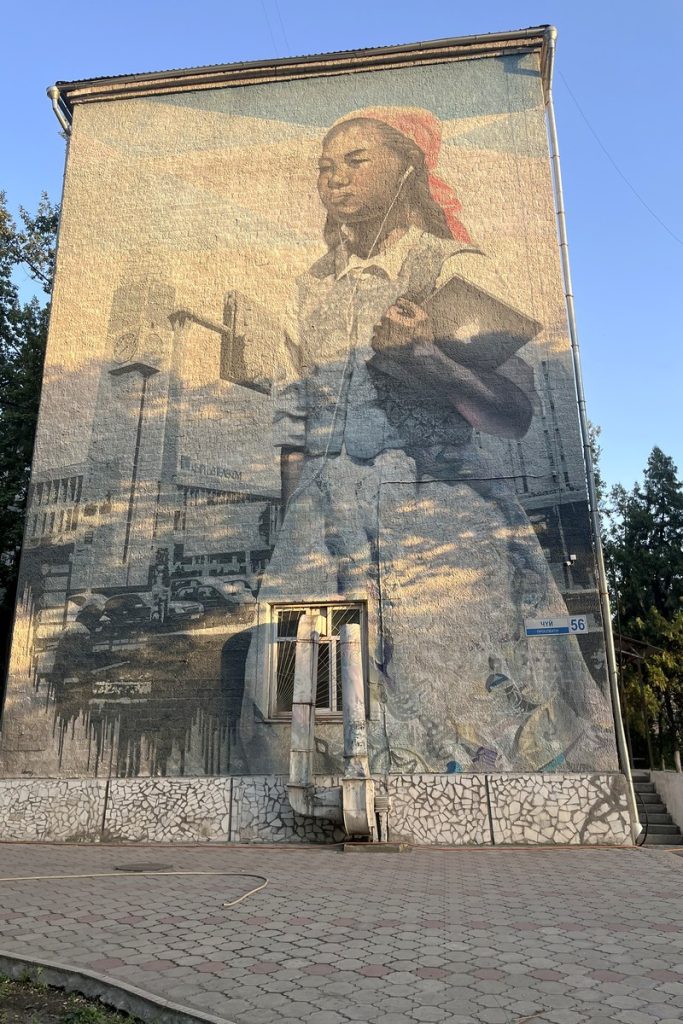
Most attractions, such as museums, food halls, parks, and places of worship, are close by or a short taxi ride away.
Soviet-era brutalist architecture and World War Two monuments are dotted around the city in a typically imposing fashion… although the USSR hangover might be less obvious in years to come as the city is undergoing a quiet decommunisation, removing statues of Lenin and renaming several streets and schools.
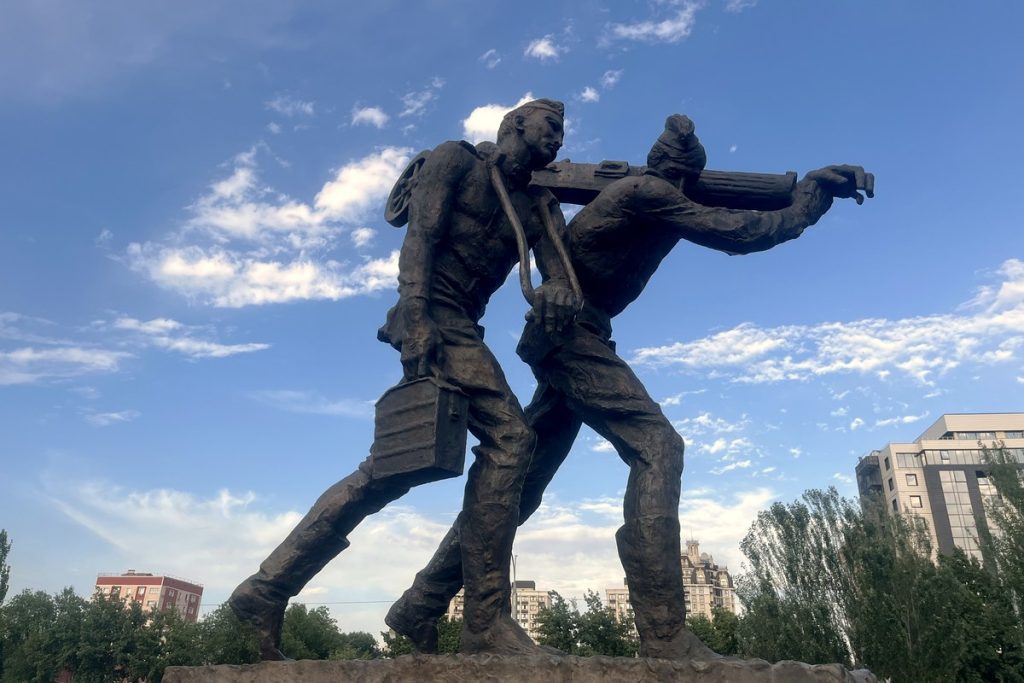
However, it remains to be seen how far that will go; I only heard one side of the story when I asked.
As it’s such an important part of the country’s history, and the city looks simply Soviet as f**k, the following places in Kyrgyzstan’s capital remain focal points.
2. Ala-Too Square
I have seen many men on horseback glorified in town squares, but I don’t recall any with such an impressive nickname as “Manas the Magmanimous,” the legendary founder and uniter of the Kyrgyz people who rallied split tribes across the land to fight off invaders.
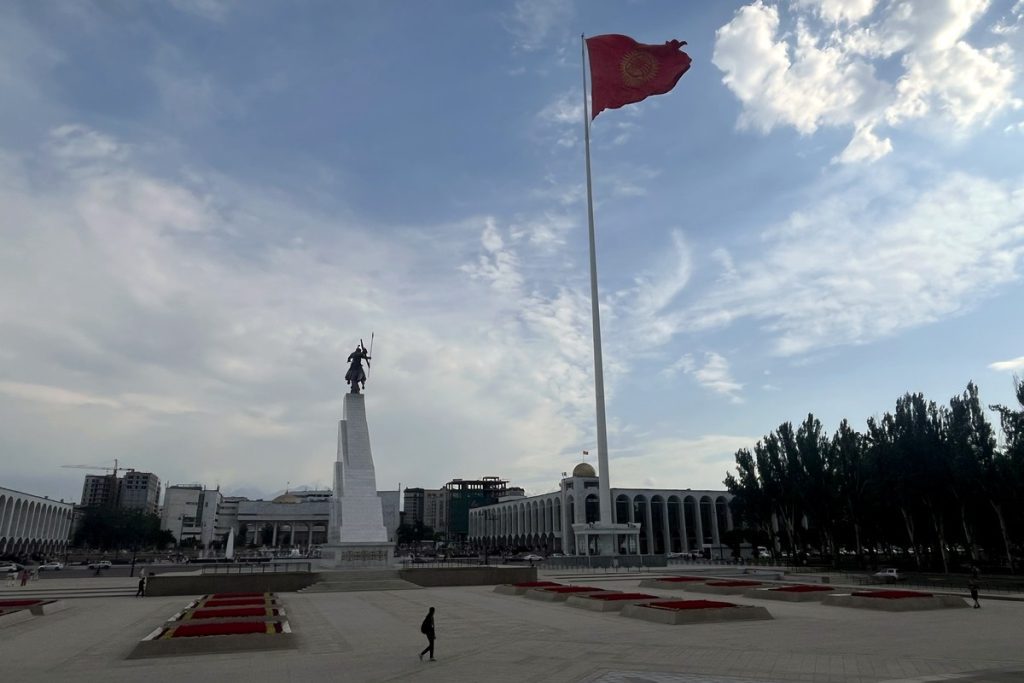
Manas stands tall in the main square, but the area is undergoing major renovations, so restrictions may vary depending on when you go.
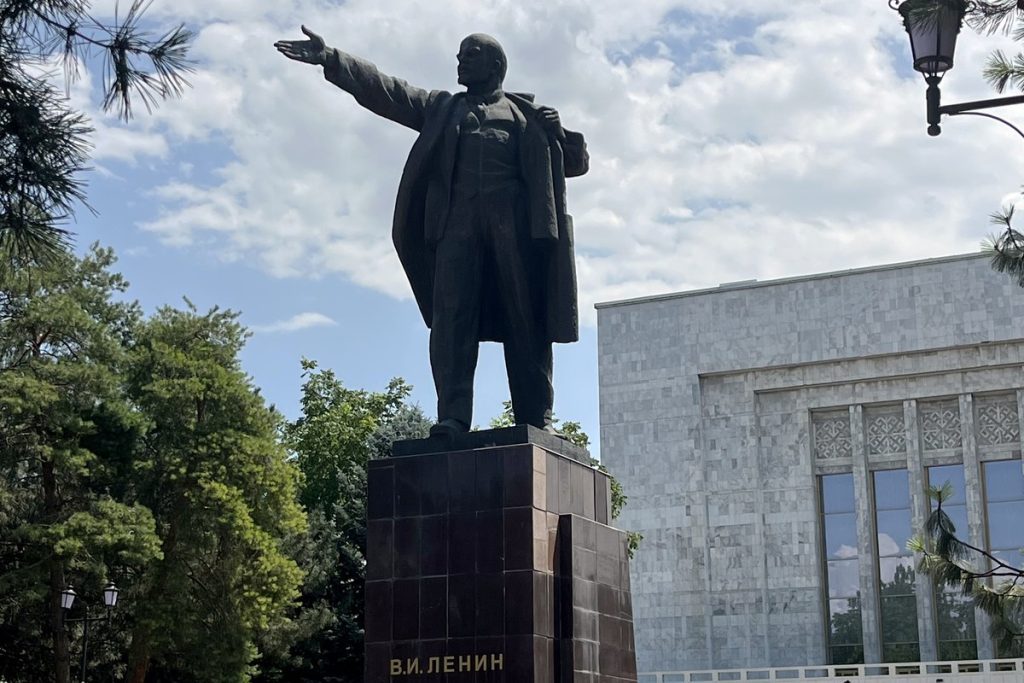
Ala-Too Square was called Lenin Square and was renamed in 1991 after Kyrgyzstan gained independence from the Soviet Union; a statue of Lenin was moved to Old Square behind the State Historical Museum.
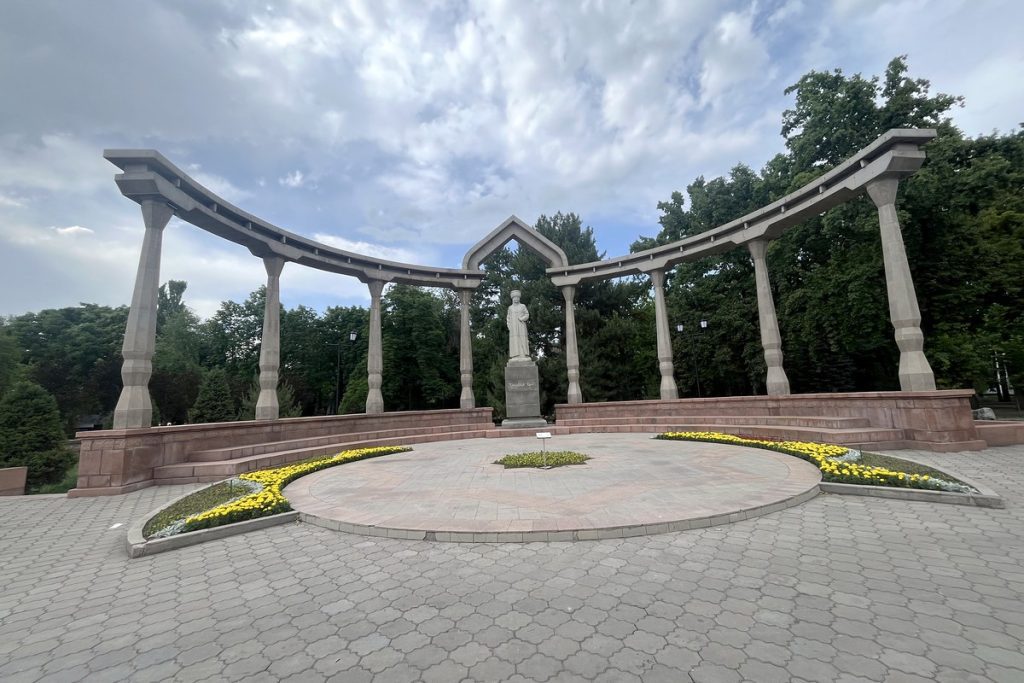
Nearby in Oak Park, look out for the colonnade honouring Kurmanjan Datka, the “Queen of the South” and arguably Kyrgyzstan’s greatest matriarch. When her husband, the ruler of the Alay region, was murdered in 1862, she stepped up and led the southern Kyrgyz tribes herself, earning the rank of Datka (general), which was practically unheard of for a woman in 19th-century Central Asia.
When the Russian Empire rolled into the region, she chose to negotiate rather than watch her people be slaughtered. Today she’s on the 50 som note and even has her own film, Kurmanjan Datka: Queen of the Mountains (2014). Not bad going.
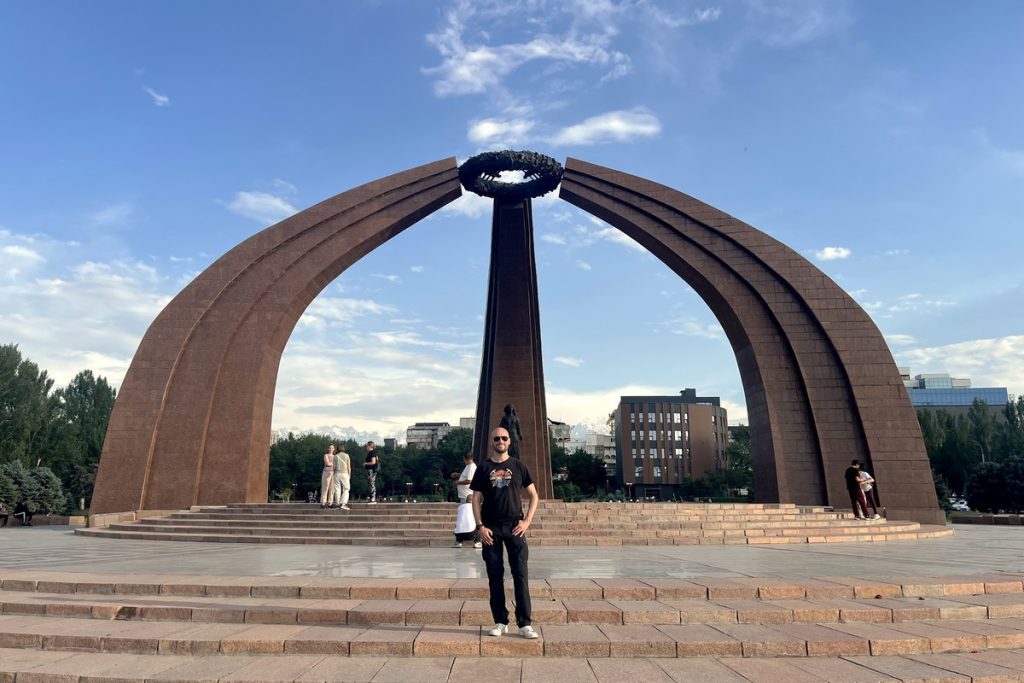
3. Victory Square & Eternal Flame
World War II, also known as the ‘Great Patriotic War’ in former Soviet nations, is almost always commemorated in a large square in major cities, and Bishkek is no different.
What does stand out, and I have to admit I am not classy enough to have noticed this without help from my tour guide, is that the framing of the roof above the eternal flame and the artwork of a mourning woman represents the traditional yurts (tents of the nomadic people of Kyrgyzstan).
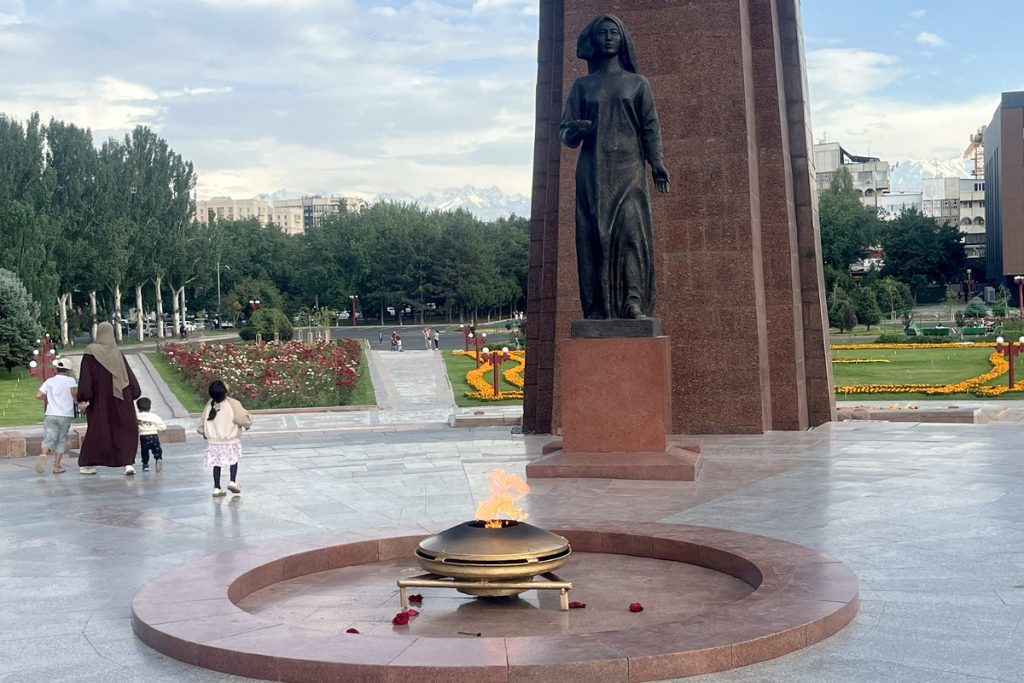
The fusion of military history with the region’s proud nomadic culture is also complemented by the backdrop of the snowy mountains of Kyrgyz Ala-Too, adding an extra layer of beauty to a wonderful design
4. Get a Bird’s-Eye View From Burana Tower
Burana Tower isn’t exactly the claustrophobe’s dream visit; I am high on that spectrum, but my other option was a dingy, packed museum with lots of human traffic, and I do love a good view.
So I picked my poison and climbed the eleventh-century tower, hoping to be rewarded with a cracking panorama of Chuy Valley at the top. The walk to the top was short, and you have to be respectful of people coming down.
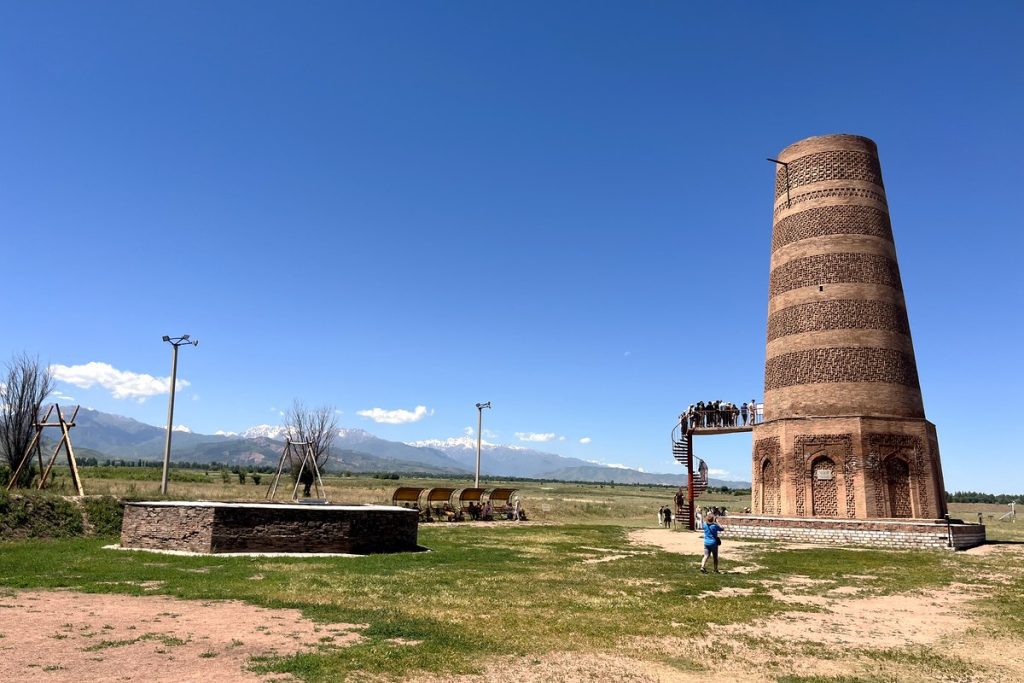
With a clear day and a gorgeous view (our tour group was there in June, and this region is scorching hot), the minimal effort was worth the lovely landscape below.
5. Get Snacks in Osh Bazaar
Osh Bazaar is one of the most famous and liveliest food markets in Kyrgyzstan and also one of the largest and oldest. I visited five Stans on this trip; each one had fantastic food markets with friendly, welcoming energy.
Sensory overload hits as you smell freshly baked bread and are offered fresh pomegranate juice to hydrate after the brutal sun has beaten down on you all day.
If you’re a bread lover, you are going to be in heaven in Central Asia. I will burn a candle for any visiting celiacs. And weep for your plight.
The vendors are fiercely proud of their food, herbs and spices and offer you samples to try without any scams or pushiness.
The market also has local textiles if you want to buy a gift for someone back home, but the real winners here are foodies who want to go carte blanche on tasty snacks.
6. Travel Around Issyk-Kul
The north coast of Issyk-Kul is a getaway for locals, and it feels much more vast when you arrive from Kyrgyzstan’s modern cities. You can pack a picnic to Novyy Plyazh Balykchy (New Beach), visit a restaurant for more bangin’ bread bonanza, and hike around Lake Issyk-Kul.
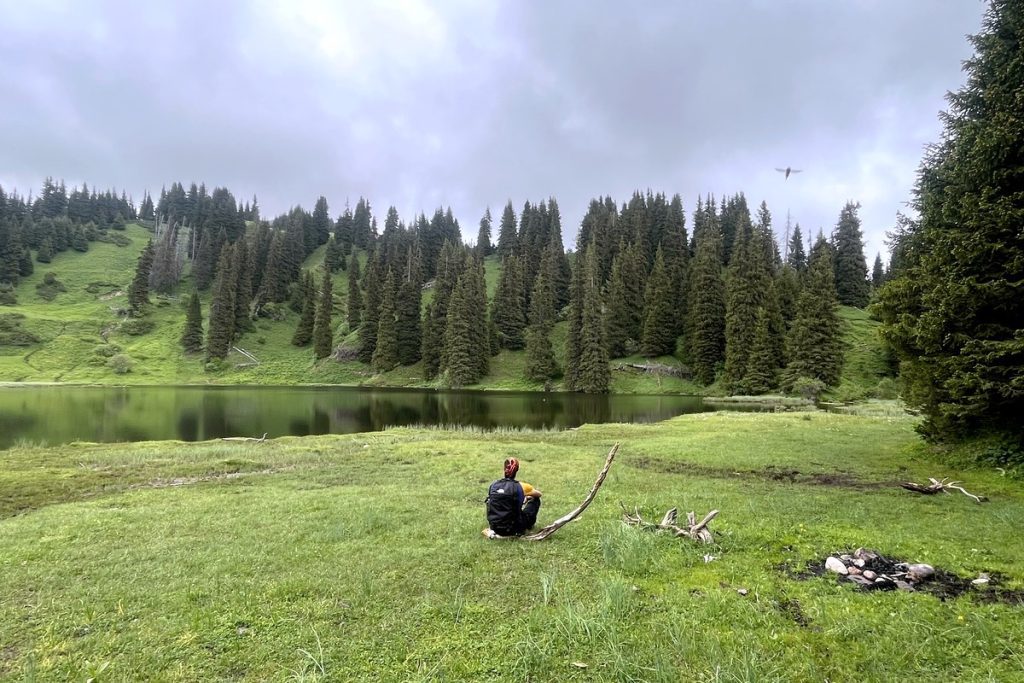
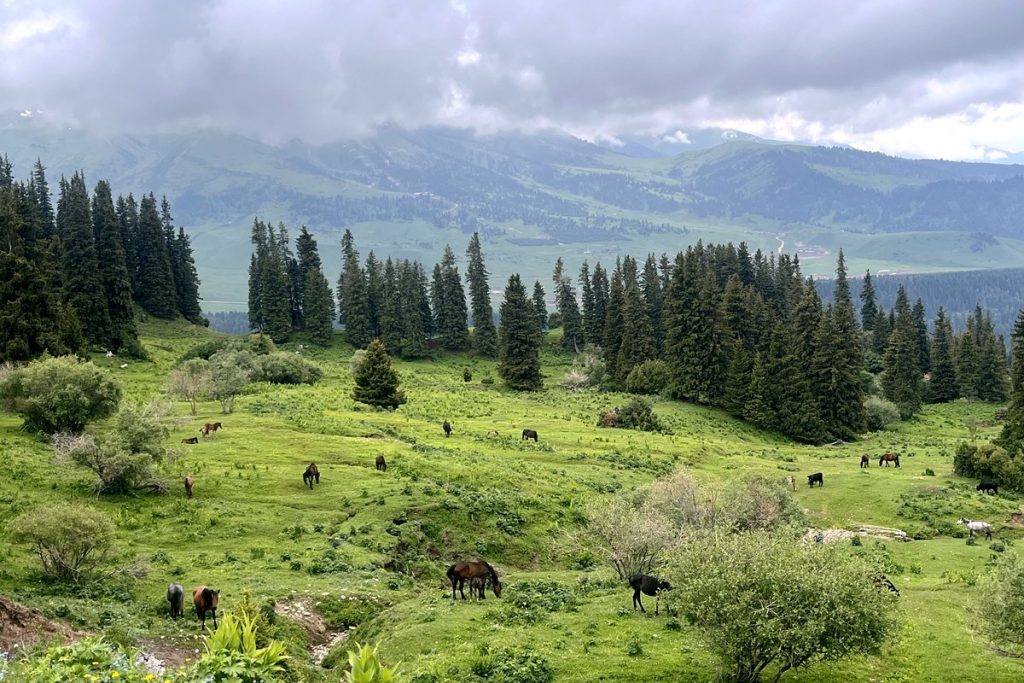
You’ll need decent hiking shoes, and it’ll take about 3 hours to hike around the lake, where you’ll meet curious horses trotting around tall trees. It’s one of the prettiest places to visit in Kyrgyzstan, but if canyons are more your cup of tea, you can choose a similar-length hike in Fairy Tale Canyon (Skazka Canyon).
7. Watch The Kyrgyz Eagle Hunters in Action
Eagle hunting (that is, using eagles to hunt for food) is an ancient way of survival in Kyrgyz culture that is still celebrated in local communities, so much so that hunters go head-to-head at the World Nomad Games.
I spent a freezing winter at the Mongolian Golden Eagle Hunting Festival in 2025, during my mammoth “this will be my last ever long trip”, and to be honest, I was a little Central-Asian-Falconed out as we watched them in action.
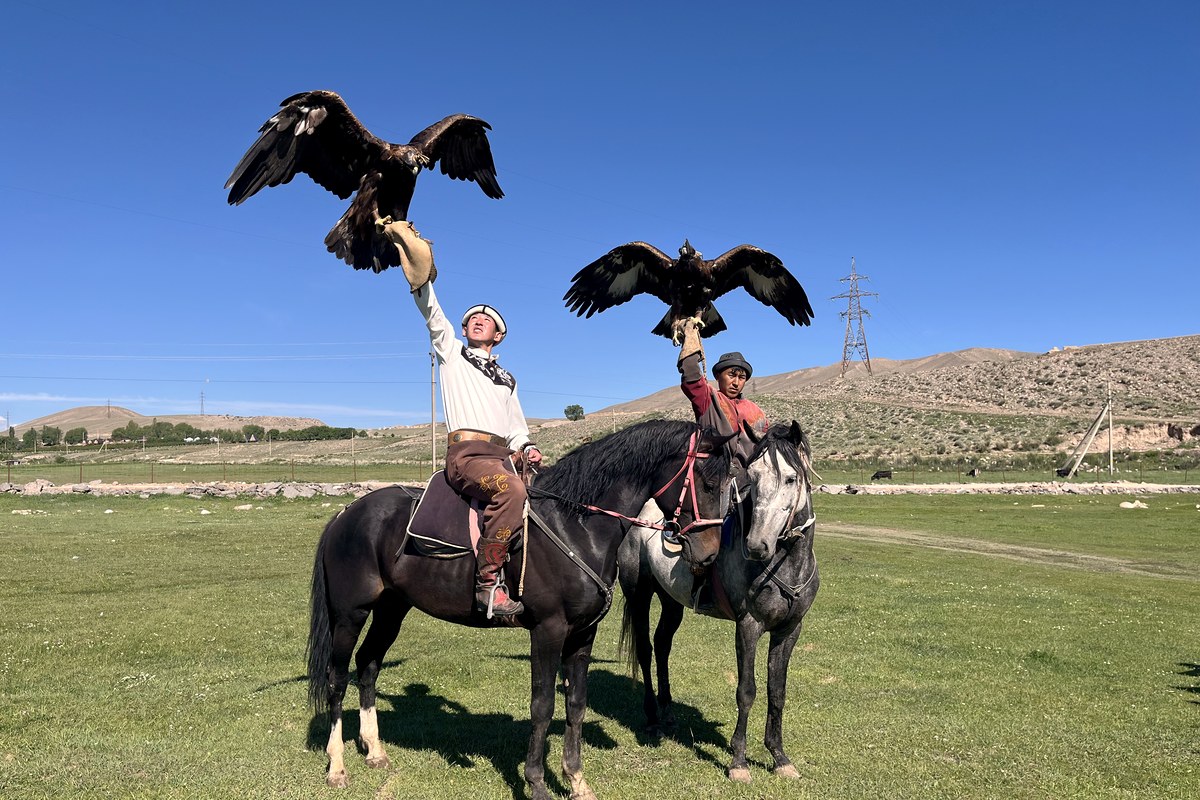
Still, the locals in Issyk-Kul made for striking photos: arms raised aloft, their solid dark or grey beards framing them, with those majestic birds of prey perched proudly on the horses. We even got to participate in a little archery contest against one another.
But the real treat was these following animals…
8. Meet the Kyrgyz Taigan Hunting Dogs
As a keen dog lover, I’m always fascinated to find a new breed of man’s best friend, and I was blown away by the cuteness and athletic prowess of the Taigan Hunting Dogs, who always work in pairs.
Jet black, with a collie-like face and a lanky build more akin to a lurcher, these gifts from the gods were incredibly friendly and playful while we hung out with them.
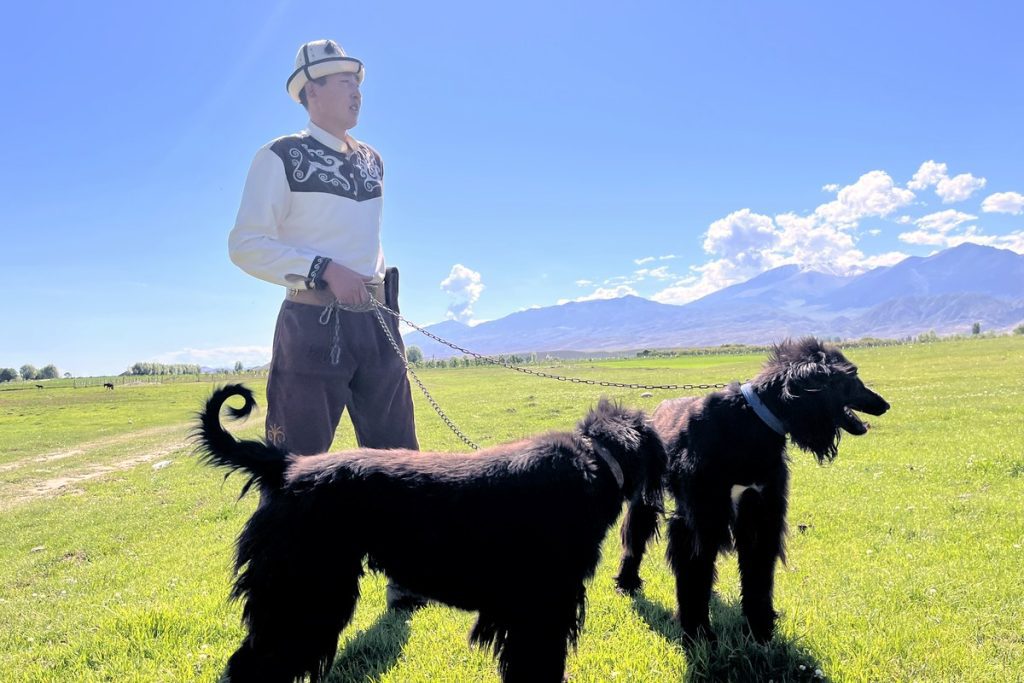
I didn’t want to leave! Highlight of my trip to Kyrgyzstan.
9. Church Stop and Learn About Stalin’s Daddy Issues
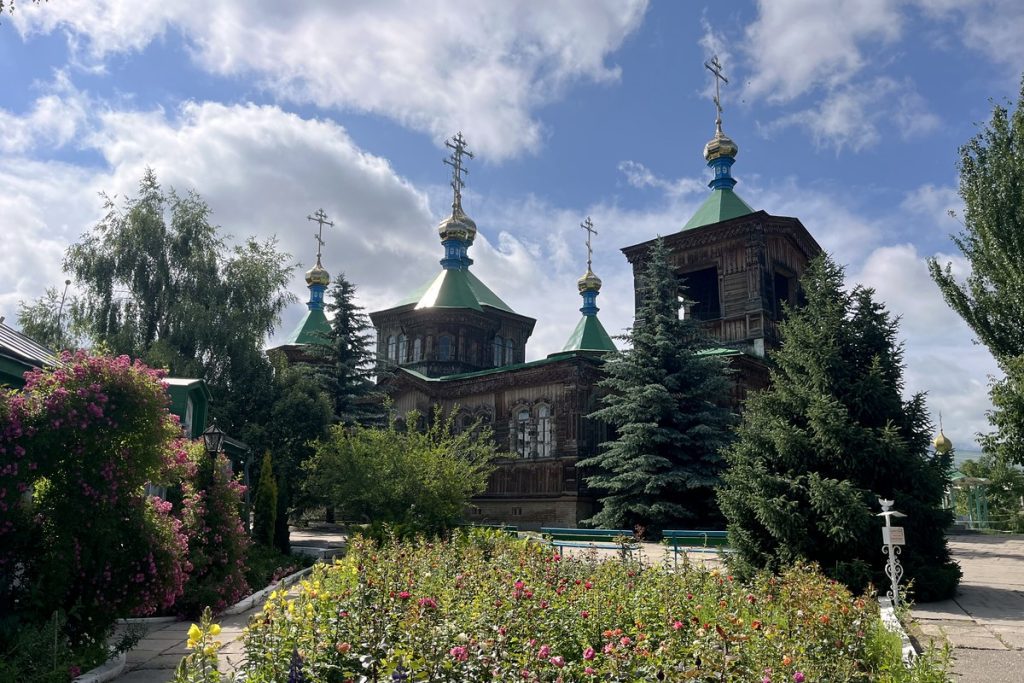
Lovers of places of worship can check out the Holy Trinity Cathedral in Karakol, a 26-metre building originally made of brick but destroyed in the 1889 Chilik earthquake. An architect rebuilt it with wood and claimed to have engineered it to be earthquake-proof.
The creator was right; the building withstood another earthquake in 1911. This green-and-brown church with onion domes has literally stood the test of time, as has its sister building, Ascension Cathedral in Almaty, Kazakhstan (pictured below as my phone ran out of battery for the original one, but these are very similar).
After the church, my ears pricked up when my guide told me about the incredibly familiar-looking bust of Nikolai Mikhailovich at the Przhevalsky Museum: apparently, with unconfirmed rumours, it has been alleged that he had an affair with Joseph Stalin’s mother during a suspicious time.
Soviet dictator meets Star Wars; this was not on my Kyrgyzstan bingo card.
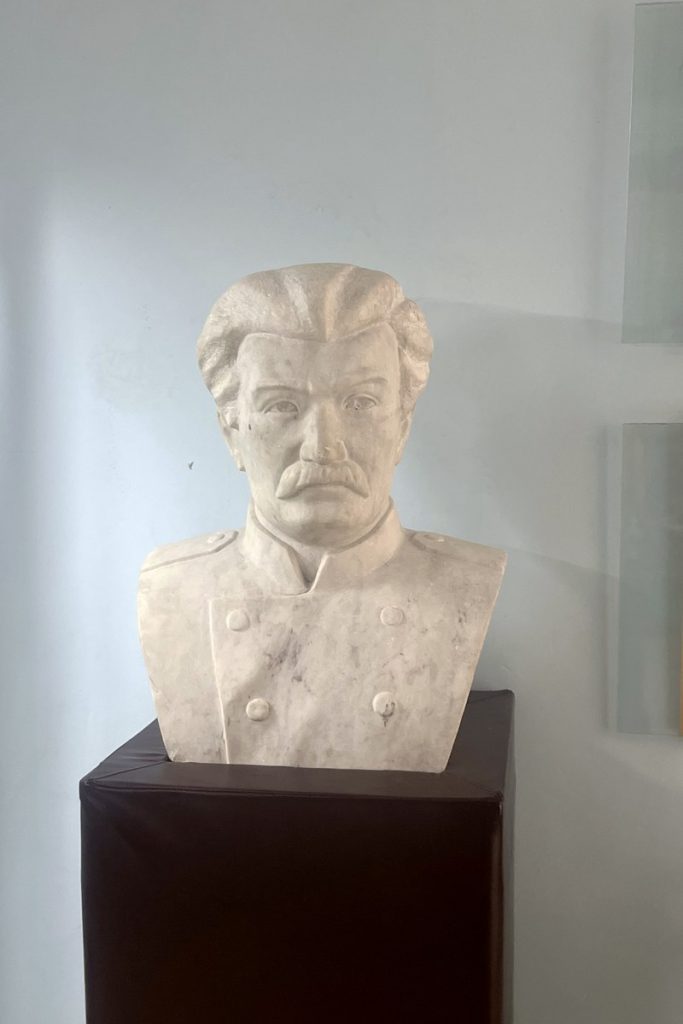
My tour guide was hilarious and liked to take the piss a lot, so he could maybe have been joking, but please… take a close look at that bust above and tell me what you think.
10. Yrdyk: Dinner With a Dungan Family
The Dungan community is an ethnic group of Chinese-speaking Muslims who migrated in the 19th century following heavy oppression under the Qing dynasty. They survived harsh crossings of the Tian Shan Mountains in harsh winters, crossing Kyrgyzstan and Kazakhstan.
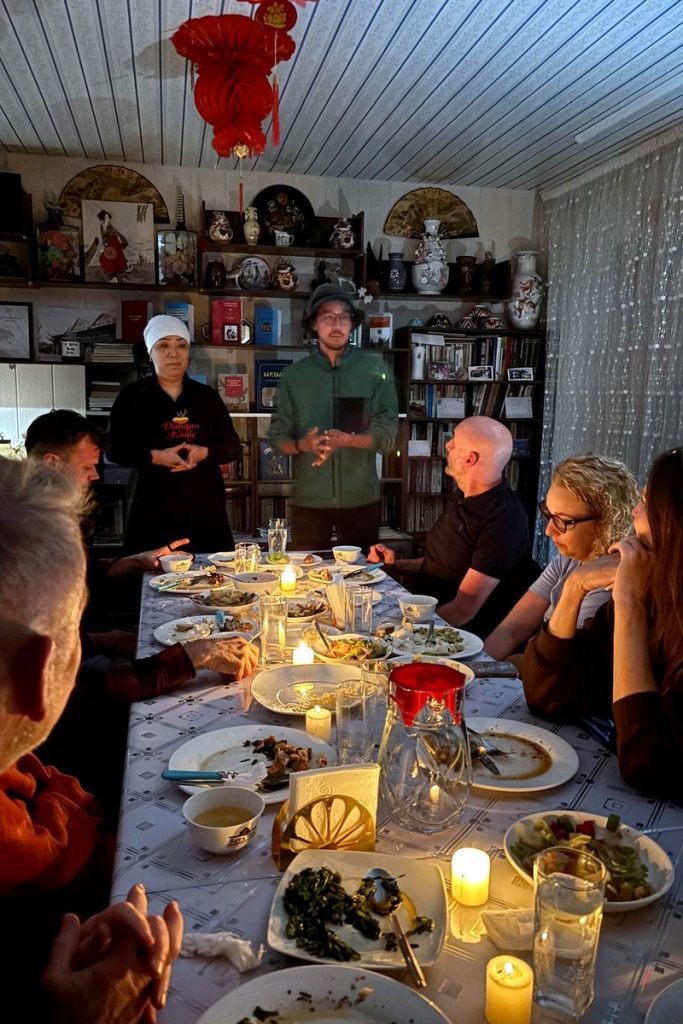
You can arrange with a tour operator to support them with a dinner at a Dungan family’s home in the nearby settlement of Yrdyk. Their food is tapas-style, with a feast of smaller savoury dishes with noodles, soup, and an array of vegetables with a nice hint of spice.
An overall wonderful culinary experience while learning about a culture I had admittedly never heard of before. Lovely people too. Kyrgyzstan was fantastic; we packed a lot into our time in Kyrgyzstan, including painting and gardening in a homeless shelter thanks to the brilliant Mudita Adventures.
What a delightful country, a relatively small gem in Central Asia.