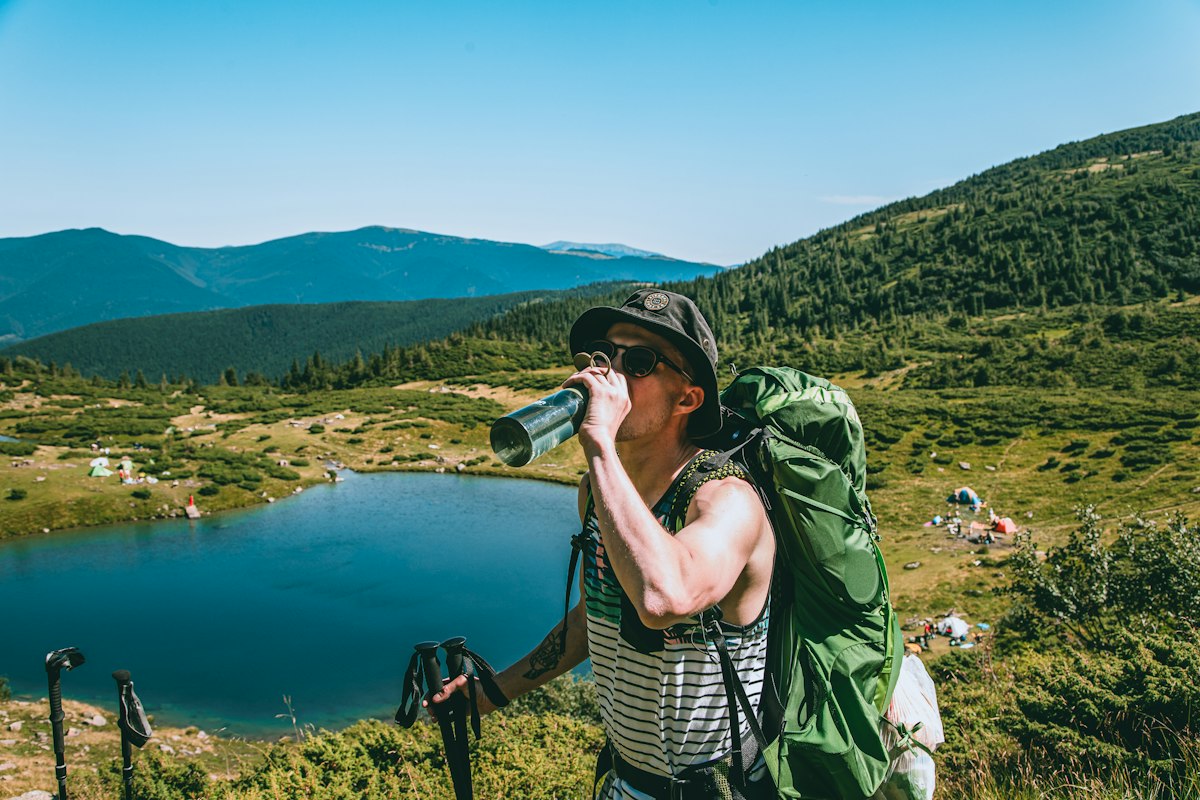
The spring is marked on the map, and when the hiker reaches it late in the afternoon there is only a damp patch of gravel under the rocks. The next reliable water is a long walk away, and the bottle in the pack is less than half full. Nobody had checked that spring that season, and the hiker had packed as if somebody had.
Fluid Losses on a Hiking Day
A common planning figure is about 0.5 liters of water per hour of moderate hiking in moderate temperatures, rising to a liter or more an hour for strenuous hiking in high heat. Actual needs vary with body size, exertion, weather, and individual sweat rate. Heat and pack weight push that figure up together, because a heavy pack raises the effort of every climb. Rangers at Bryce Canyon recommend drinking about 1 liter every 1–2 hours on the trail, guidance meant for the climbs, altitude, and sun exposure typical of canyon hiking.
Altitude adds losses that are easy to miss. Breathing harder in cold, dry mountain air draws additional water from the body, and much of that loss happens with no visible sweat to signal it.
Water is also heavy. A liter weighs about 2.2 pounds, so a 6-liter carry for a hot, dry stretch adds more than 13 pounds to a pack. That weight tempts hikers to carry too little, which is why each stretch needs a plan before the trip starts.
Planning Water Supplies for Remote Hiking Trails
The planning unit on a remote trail is the distance between reliable sources. A route plan lists each source with the miles to the next one, and the hiker fills to whatever the longest gap requires. Those distances change with the season, so a plan copied from a guidebook needs checking against recent reports. A hiker who keeps a running note of the miles to the next source can slow down or rest in shade before a gap becomes a problem.
On moderate terrain in mild weather, a liter may cover several miles, but hot, rugged conditions or longer gaps between sources call for more. A capacity of at least 2 liters, in bottles or a hydration bladder, can be a sensible starting point, but longer dry stretches may require considerably more. The right capacity depends on the distance between reliable sources, expected conditions, and a reasonable safety margin. Collapsible bottles add capacity for a single dry stretch and weigh almost nothing once they are empty and rolled up.
Gaps on long trails are much longer. Parts of the Pacific Crest Trail have about 30 miles between reliable water, and the Hat Creek Rim in Northern California is one of the longest dry sections of the route. Stretches like that are realistic only for fit, experienced hikers carrying large volumes, and they are planned around the latest water report for the trail.
Seasonal Springs and Empty Caches
Seasonal creeks and springs that serve as water sources on the Appalachian Trail can dry up during summer and early fall, and drought can dry others earlier than expected. Water caches left at road crossings by volunteers may be empty when a hiker arrives, and trail organizations advise never relying on them.
The safer approach treats every seasonal source as dry until a recent report says otherwise. A hiker who plans the carry as if the questionable spring will fail arrives at it with water to spare, and a running spring becomes a bonus.
Electrolytes on Long Days
Sweat removes sodium along with water, and a full day of climbing in heat can lead to substantial losses of both. Plain filtered water contains almost no sodium.
Hikers who buy hydration drinks or pack salty snacks before a remote trip can replace part of that sodium with the fluids and food they consume. On a multi-day route, the last town or trailhead store before a long dry stretch is the final chance to stock up, and the salty food in a resupply box provides salt on days when the water is plain. Salted nuts and crackers count as well, since the aim on a hot day is to replace sodium lost through sweating without consuming excessive amounts of water.
Hyponatremia on Hot Trails
In a six-year study of heat-related illness cases in Grand Canyon National Park, 19% of nonfatal cases were assessed as suspected hyponatremia, a dangerous drop in blood sodium that can occur when someone retains too much water relative to sodium. It is particularly associated with drinking too much water during prolonged exertion. The same study found dehydration in about 25% of nonfatal cases, showing that both conditions deserve attention on demanding hikes.
The symptoms include confusion and vomiting, and several overlap with dehydration. Hikers can lower the risk by drinking in response to thirst on long hot days without forcing large volumes. Eating normal meals and salty snacks can help replace sodium lost through sweat, but salt intake does not make excessive water consumption safe. A long descent into a hot canyon, with steady drinking for hours and little food, is one setting where the condition can develop.
Treating Water From Natural Sources
Any stream or spring can carry organisms that cause illness days later. Hikers who carry the ten essentials should also have a reliable way to treat water from natural sources before drinking it. Portable filters, chemical treatments, and boiling are common options, but they do not all remove the same contaminants. Many backpacking filters remove bacteria and protozoa but do not reliably remove viruses, so the treatment method should match the risks at the water source. Boiling is the most reliable way to kill waterborne germs, while filtering followed by disinfection is another recommended approach.
Side streams and lake outlets are generally better choices than stagnant pools, and water with visible algae or signs of animal waste is best avoided when another source is within reach.
A lightweight filter also shortens the carries described above. It turns every reliable stream into a potential refill point, so the hiker can carry less between sources and refill as needed. A filter is quicker at a stream, and chemical tablets weigh almost nothing, so many hikers carry tablets as a backup in case the filter clogs or freezes. Chemical treatments should be used according to their instructions, including the required contact time.
Warning Signs on the Trail
In extreme heat, vomiting, confusion, or worsening symptoms are warning signs that a hiker needs to stop and seek help. Confusion, collapse, or altered consciousness can indicate heat stroke, which is a medical emergency requiring immediate assistance and rapid cooling. Moving into shade and cooling the skin with water are important first steps while emergency help is arranged.
A hiker who becomes confused after drinking large amounts of plain water and eating little needs urgent medical evaluation before anyone assumes dehydration is the cause, since hyponatremia can look similar. Giving more water without understanding the condition may make matters worse.
Partners on a remote trail can be the first to notice these signs, because a hiker sliding into either condition may not recognize it. Agreeing on a turnaround point and a check-in time before the hike gives the group a plan if the signs appear. Leaving the route and the expected return time with someone at home gives rescuers a starting point if the group cannot call out.
Dehydration Prevention in Plain Terms
Dehydration on a remote trail is a gap between the water a body loses and the water within reach, and that gap is widest on the stretch with no reliable source. Prevention, in plain terms, is a plan for that one stretch, with enough water and appropriate food to cover it, a margin for the spring that turns out to be dry, and a sensible drinking strategy that avoids both dehydration and overhydration.