
Choosing the best sunglasses after cataract surgery is a question many people first think about once they step outside after the operation. Colours often look brighter than they have for years, and sunlight on a road, a trail or open water can feel uncomfortably strong.
For anyone who runs, cycles or hikes, the questions are practical: what to wear, for how long, and whether the sunglasses you already own will do. The answer depends partly on how your eye is healing after cataract treatment, and partly on the lenses themselves, which need to block ultraviolet (UV) light and cut glare.
In this article, we will cover why you need sunglasses after cataract surgery, how long to wear them, whether you need them indoors, which type is best, which suit sport and whether sunglasses can prevent cataracts.
Why Do You Need Sunglasses After Cataract Surgery?
You usually need sunglasses after cataract surgery, which replaces the clouded lens inside the eye, because bright light can feel uncomfortable while the eye heals. The new lens is a clear artificial one, called an intraocular lens (IOL), and it lets more light into the eye than the cloudy lens did. The pupil can also stay wider than usual for about a week.
So what happens if you do not wear sunglasses after cataract surgery? Glare and bright light can make you squint, and wind or dust can irritate an eye that is still healing. Most modern IOLs block UV light, but the surface of the eye and the skin around it still need protection outdoors. That is why it helps to have a pair of wraparound sunglasses ready before the day of your operation.
How Long Should You Wear Sunglasses After Cataract Surgery?
You usually need to wear sunglasses outdoors for about the first month after cataract surgery, when the eye is most sensitive to light. Light sensitivity tends to ease within a few weeks as the eye heals, although the exact timing varies from person to person.
Always follow your eye surgeon’s advice on how long to wear them, since it depends on how your eye is healing. After the first month, most people no longer need sunglasses for comfort. Still, wearing them outdoors is worth continuing, since UV light can harm the eyes over time.
Do You Have to Wear Sunglasses Indoors After Cataract Surgery?
You do not usually have to wear sunglasses indoors after cataract surgery. But sunglasses can help in the first few days if bright ceiling lights or a sunny window feel uncomfortable.
Dark lenses indoors can also make it harder to see steps and edges, so take them off in dim rooms. At night, you may need to wear a plastic shield over the eye instead, which protects it while you sleep and stops you rubbing it. If you are unsure whether your eye needs protection indoors, check with your eye surgeon.
What Type of Sunglasses Are Best After Cataract Surgery?
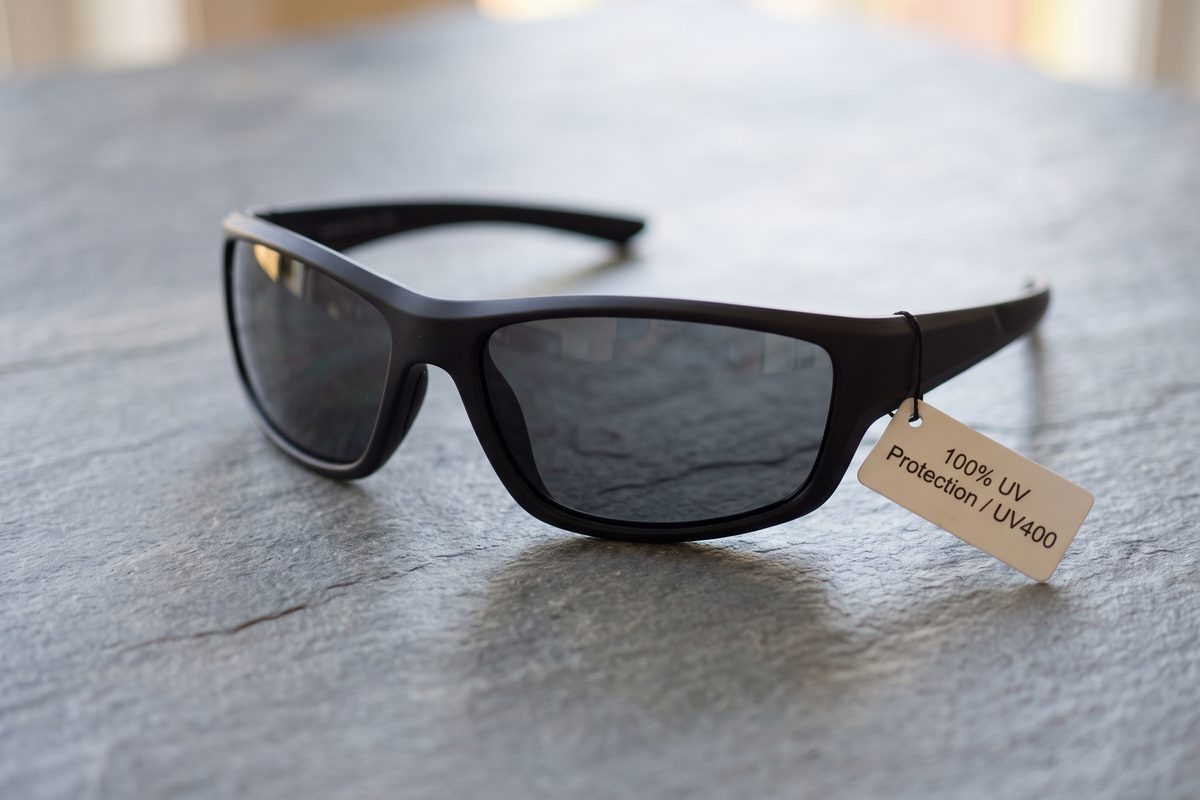
The best type of sunglasses after cataract surgery blocks UV light fully and fits well, and it does not have to be a special pair of cataract sunglasses. Regular sunglasses are usually fine if they have these features:
- Full UV protection – look for a label that says 100% UV protection or UV400, which blocks both main types of UV light. Inexpensive sunglasses with this label are a better choice than designer ones without it.
- Wraparound frames – a wraparound shape stops light and UV from entering at the sides, and it helps keep wind and dust away from a healing eye.
- Comfortable tint – a darker lens reduces brightness but does not block more UV, and grey, brown or amber lenses can all work if they carry the UV label.
- Polarised lenses – polarised lenses reduce glare from water, wet roads and snow, which many people find helpful when driving. Polarisation does not block UV on its own, so check the label for UV protection too.
If you wear glasses, fit-over sunglasses or prescription sunglasses let you keep your vision correction outdoors.
What Are the Best Sunglasses for Sport After Cataract Surgery?
The best sunglasses for sport after cataract surgery wrap closely around your face and block UV light fully. You can usually return to sport once your eye surgeon says the eye has healed. Until then, the standard advice is to avoid sport, heavy lifting and swimming, even with goggles, and to keep water out of the eye.
When you do return, the right pair depends on the activity:
- Running and cycling – light wraparound frames with grippy nose pads stay in place when you sweat, and they keep wind and grit out of your eyes.
- Hiking and skiing – sunlight is stronger at altitude and when it reflects off snow, so wear full UV protection, or ski goggles with UV-blocking lenses on the slopes.
- Water sports – water reflects sunlight, so polarised sunglasses with full UV protection cut the glare and protect your eyes at the same time.
For hikes and long runs in strong sun, a broad-brimmed hat worn with your sunglasses adds more protection.
Do Sunglasses Prevent Cataracts?
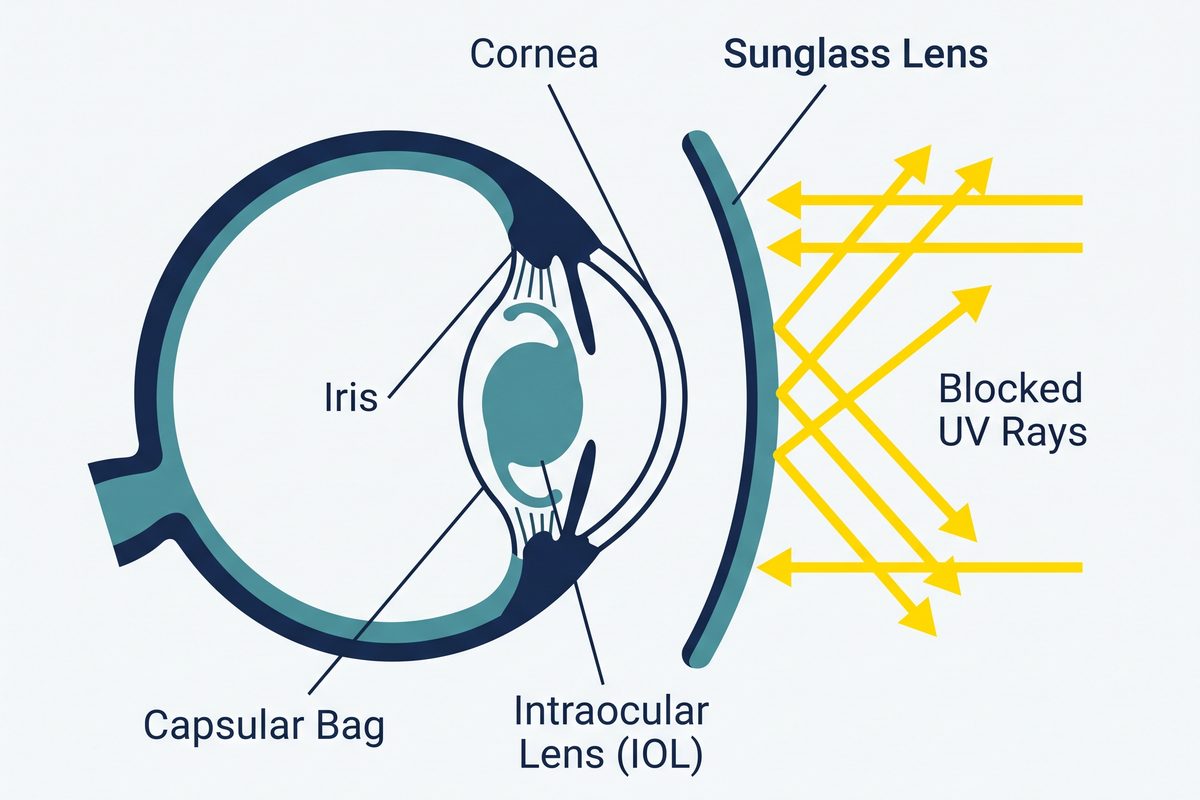
Sunglasses cannot prevent cataracts completely, but UV-blocking sunglasses can lower one of the risks. Age is the most common cause of cataracts, and long-term exposure to sunlight also raises the risk, as do smoking and diabetes.
Research shows that both main types of UV light can contribute to cataracts. So wraparound sunglasses marked UV400 can reduce that risk, because they also block UV light reflected in from the sides. For those who train in the sun for hours each week, that protection matters, since clouds do not block UV light either.
If you have had surgery on one eye, the same habit protects your other eye. The artificial lens itself cannot develop a cataract. In some people, though, the thin capsule that holds the lens becomes cloudy months or years later and blurs vision again. A quick laser procedure can usually clear this by making a small opening in the cloudy capsule.
The Short Version: Back Outdoors With Clearer Vision
The best sunglasses after cataract surgery do not need to be special or expensive. A comfortable wraparound pair with full UV protection meets most needs, and polarised lenses help near water and on the road. Wear them outdoors for about the first month, and wait for your eye surgeon’s go-ahead before you return to sport.
Colours and outdoor light often look clearer after cataract surgery than they have for years. With the right pair of sunglasses, you can enjoy that view on every run, ride and hike for many seasons to come.