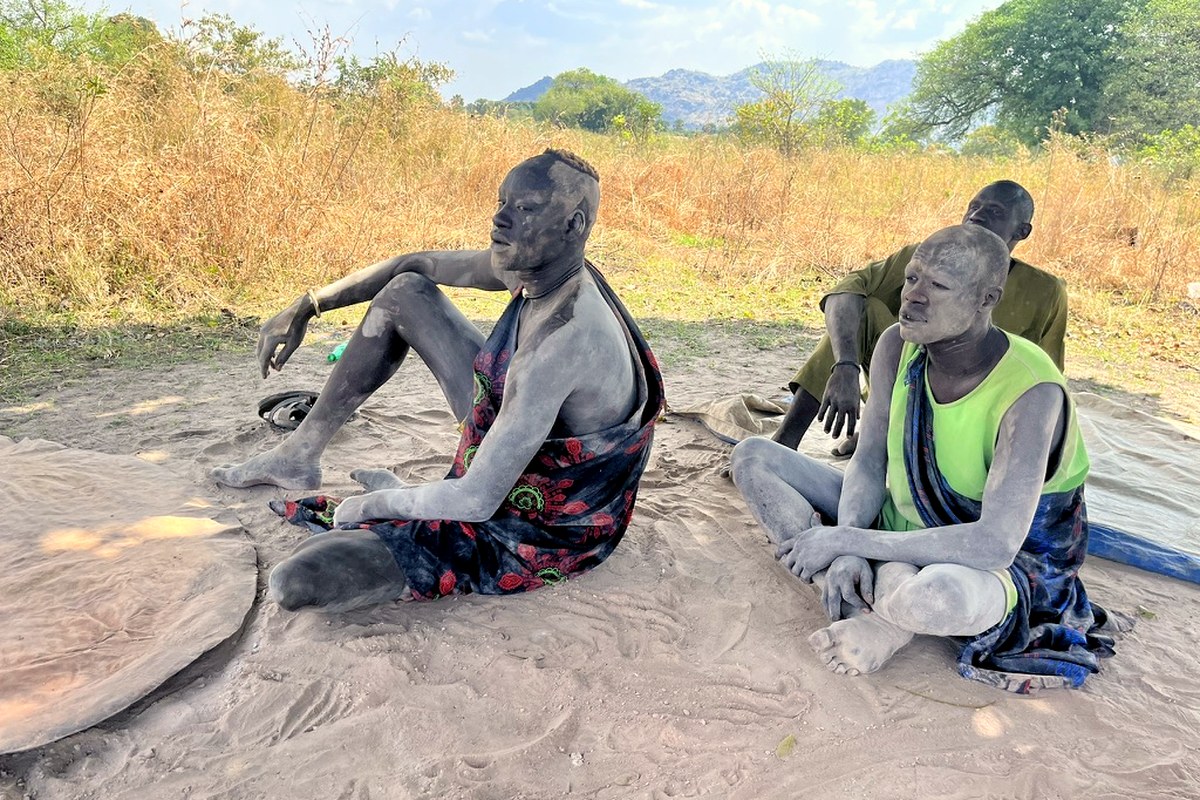
I camped under the stars for two days, surrounded by noisy animals and piles of burning cow dung amongst the tallest tribe in the world, the mighty Mundari of South Sudan!
Visiting South Sudan is tricky and anxiety-inducing business: You need a fixer, and you can only apply within 7 days of your intended arrival (it’s quite a long way to go at the last minute, and potential rejection can be a headache for your plans).
South Sudan is dangerous due to constant civil unrest, high crime rates, and volatile spillover effects of the brutal war in neighbouring Sudan.
You also need permission from the tribal chief; that’s where the fixer comes in. I was arriving from the Central African Republic, where I had an absolutely horrendous time, so I was feeling antsy about not having any US dollars to pay the main man for after getting fleeced/bribed and arrested in Bangui for the last week.
Meeting My Mundari Fixer
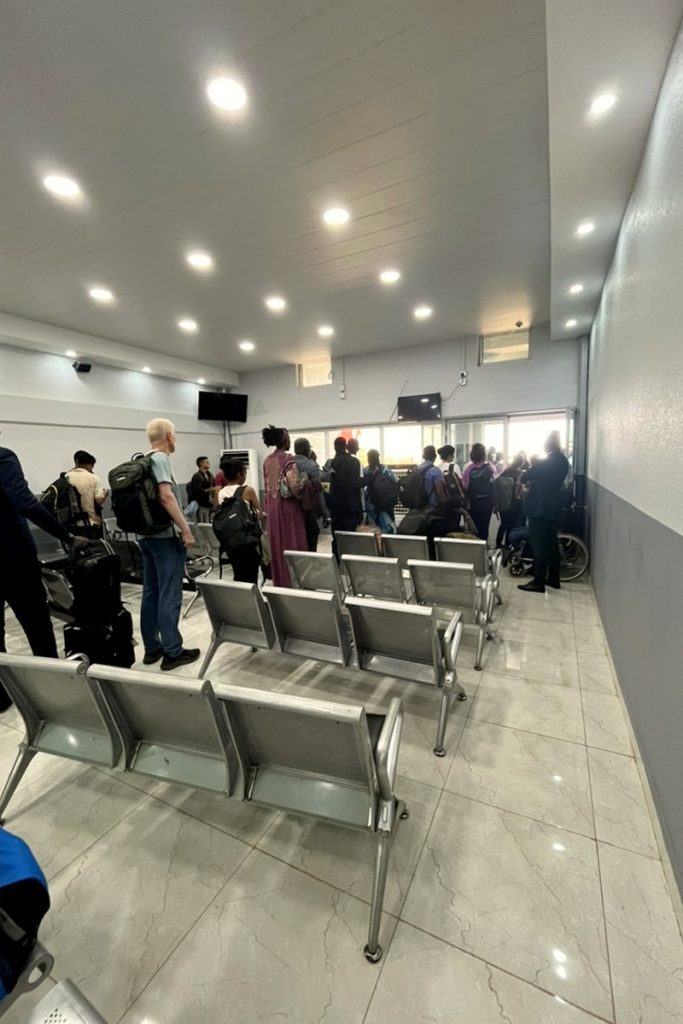
Neither my e-SIM nor my backup e-SIM worked on arrival at Juba International Airport (manage your expectations with that one), and so I went outside and looked for a very big bloke, which was a tall order in a nation of giants.
It didn’t take me long to spot 6′5″ Frederick (the runt of the litter according to him) amongst the other men, dressed in a dapper Mundari cloak with tribal scars across his forehead and a big beaming smile. I was a bit taken aback; he was a very handsome fella, much better-looking than his WhatsApp profile photo suggested. He could easily be a famous model if he lived in a Western country.
After bantering about his slow responses during the application process, I nervously followed him to a Western Union, where I had sent myself a large wire transfer of US dollars as a Hail Mary, and, thankfully, it was painless.
We stopped for food at a proper local restaurant, where I had a Sudanese fava bean dish with janjaro and chapati, washed down with my favourite drink in the unapologetic African sun: hibiscus juice, fully fuelled for our trip to the Mundari camp.
First Impressions: Entering Mundari Land
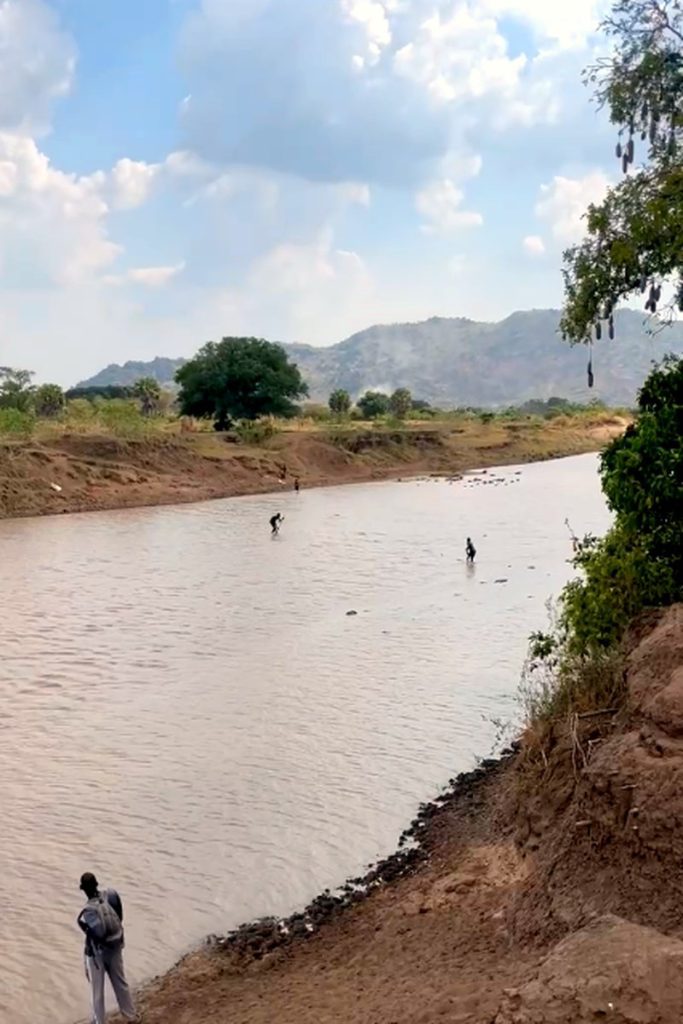
We arrived in Terekeka via SUV, 75 kilometres from the capital, Juba, the homeland of the Mundari, centred around the Nile River.
A group of young Mundari boys came to help me with my bag and sleeping bags. I took off my shoes, and we waded across the river as Frederick teased me, backpedalling on his earlier answer to my concern about whether there were any crocodiles in this body of water, this time joking, “Yes, but only 7-foot-long ones.”
He was, of course, absolutely fu**ing with me, but it certainly got me across faster!
Once we got to the main camp, I met a couple of leggy lads and lasses, and we chatted for a bit until the rest of the Mundari arrived back. It was a quiet affair until then, so I channelled my poor man’s Louis Theroux and asked questions about their story.
Mundari Warriors and the Legacy of Strength
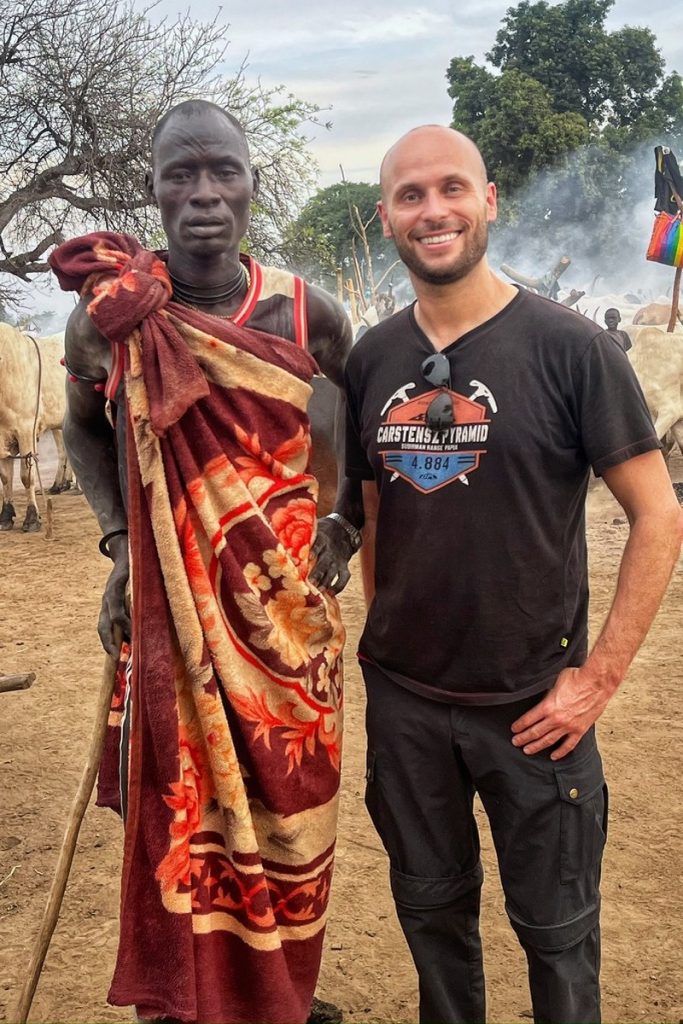
The Mundari have a deep warrior ethos rooted in their semi-nomadic pastoralist life. They are part of the Nilotic peoples and are renowned for their own form of wrestling, which young men train for from childhood to manhood.
I was told that competitions are regularly held to settle disputes non-violently, build status and show strength and honour amongst the tribe.
The Mundari bear the burden of armed protection for their cattle, and chosen men carry AK-47s to defend them from rival groups, wild animals, and thieves. Cattle raiding is a longstanding regional issue, with thousands of animals stolen yearly and deadly clashes.
Sadly, Frederick’s brother lost his life to armed thieves a couple of months before I arrived.
A sea of tall tribespeople swarmed in. Official statistics on average height are limited; the tallest man I saw was around 7 feet (2.13 metres), and the tallest woman was about 6′7″ (2 metres).
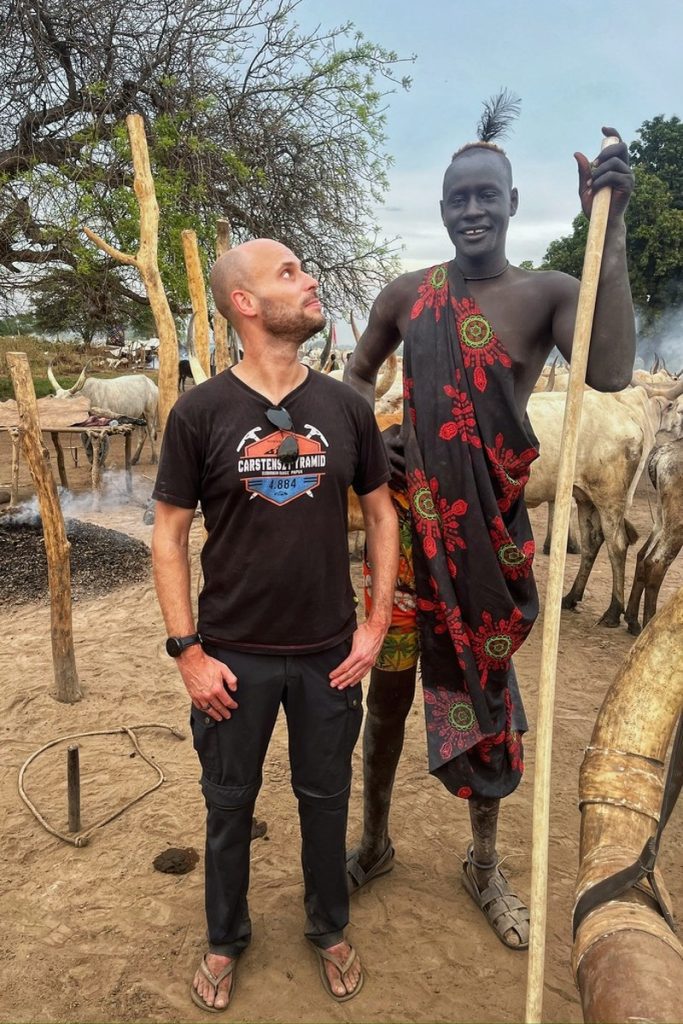
Full disclosure: the Mundari aren’t the only ones claiming the “tallest tribe in the world” crown. Their neighbours, the Dinka, are often given the title, and I had a mini-panic that I’d travelled all this way to meet the runners-up.
The Mundari insist it’s them, naturally, but a few Dinka were hanging out at the camp with us too, so I’ve got both covered.
Bone of contention settled (sort of).
The Traditions of the Mundari Tribe
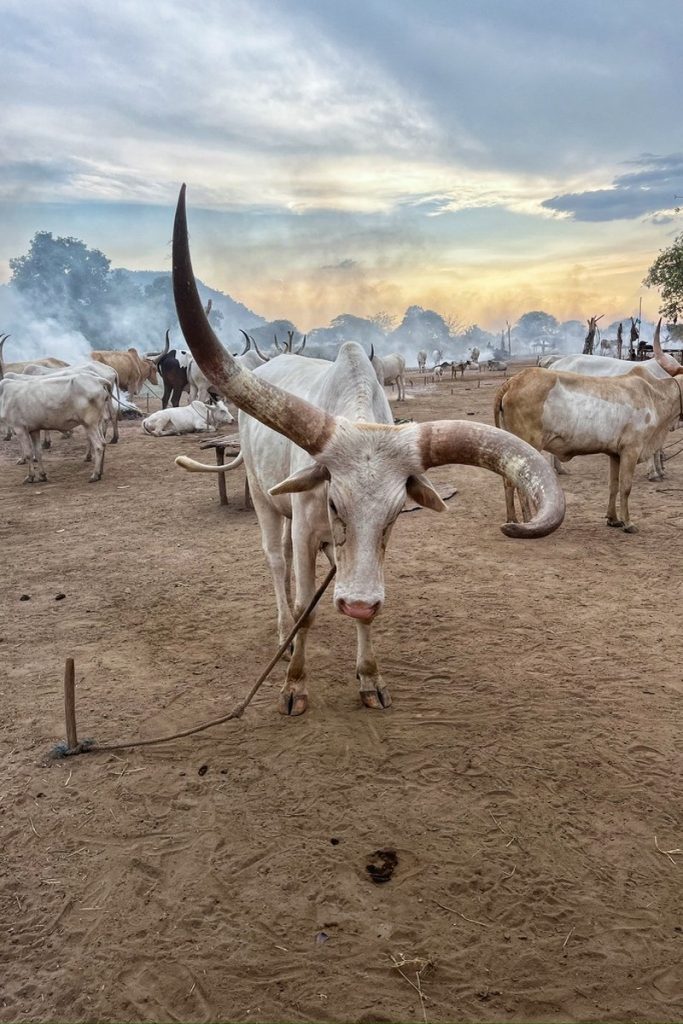
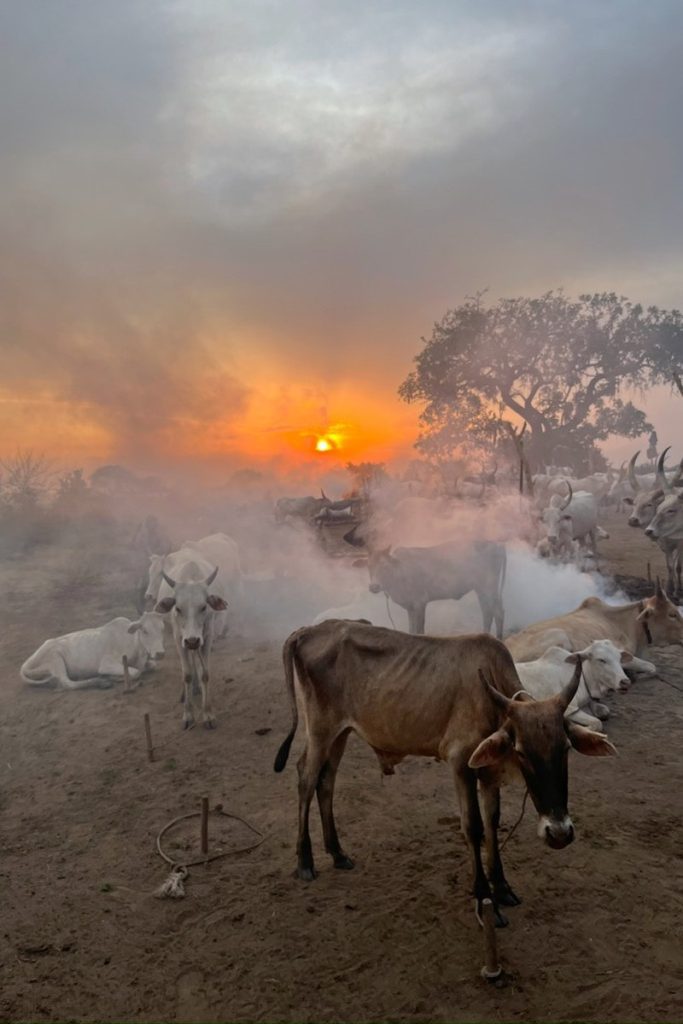
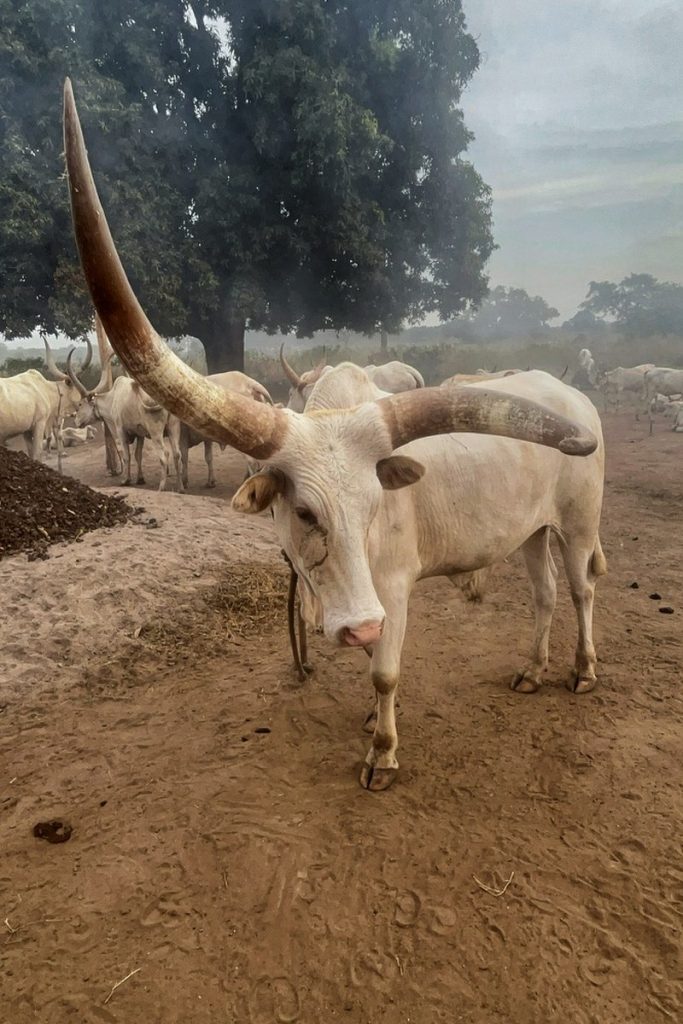
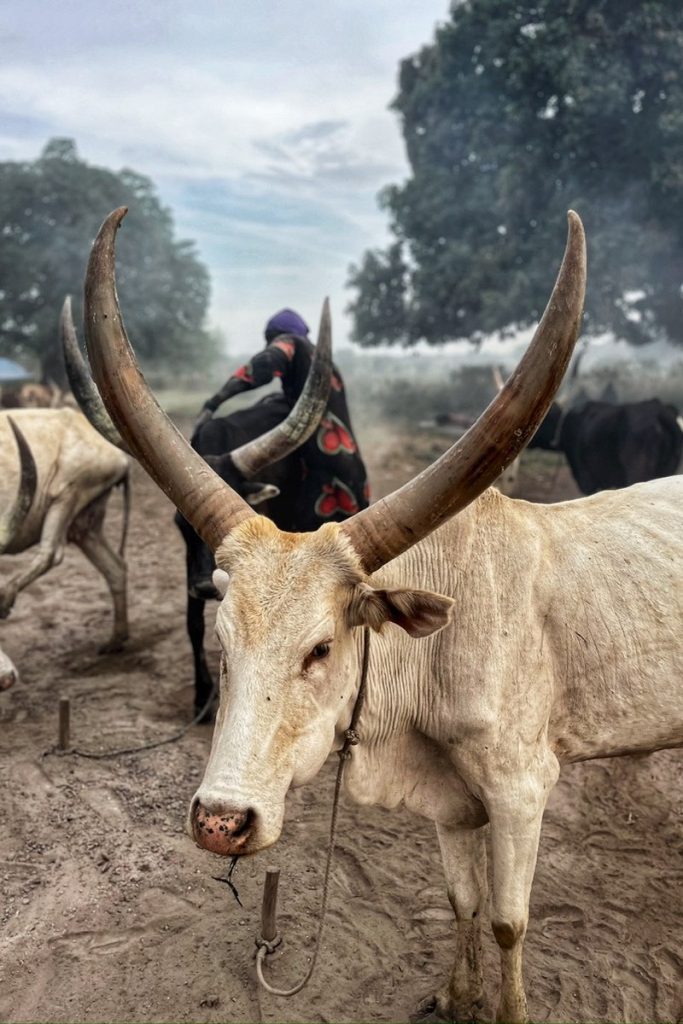
Just before sunset, the Mundari men and women arrived back at camp in droves, with bells ringing, voices bellowing, and, of course, the recently viral beautiful cows that wowed the world with their gigantic curved horns.
This was what I was here for: to be a passing observer of the traditions of the Mundari Tribe. I’m not shy by any stretch of the imagination, but as a guest in their home, I tried to stay in the background and let them do their own thing, as tribal visits differ greatly in my experience.
Any concern I had that I might be trespassing was quickly overridden as multiple men and women approached me, asking me my name and where I was from, and before I knew it, I was quickly offered a lady’s hand in marriage for a certain number of cows when I innocently asked if the tribe members were allowed to marry outsiders.
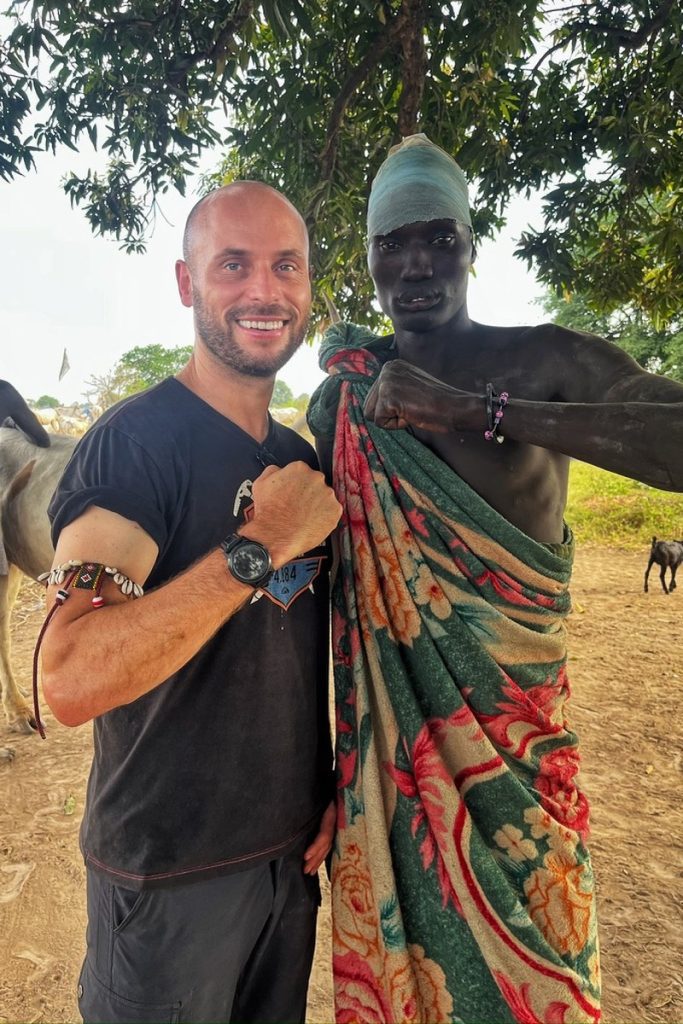
The older men had V-shaped scars (symbolising the long-horned cattle) or parallel scars on their foreheads from an ancient rite of passage, less common in younger generations.
As the hordes of cows were rounded up, children and adults gathered cow dung to burn at sunset; the smoke repels mosquitoes. The resulting ash is used as a natural sunscreen and skin conditioner for both humans and cattle.
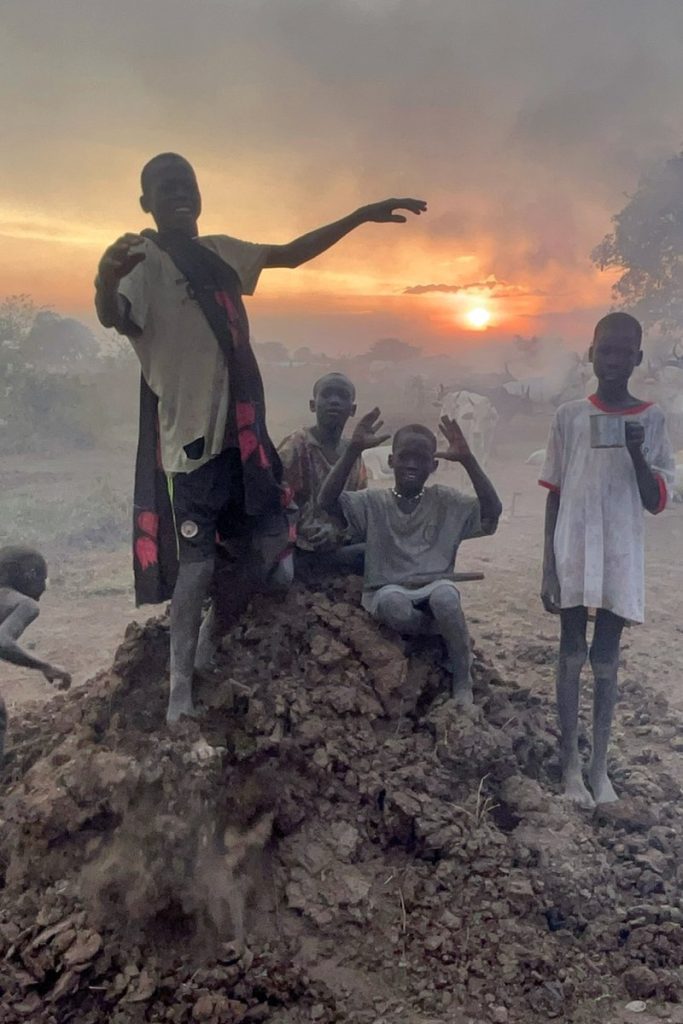
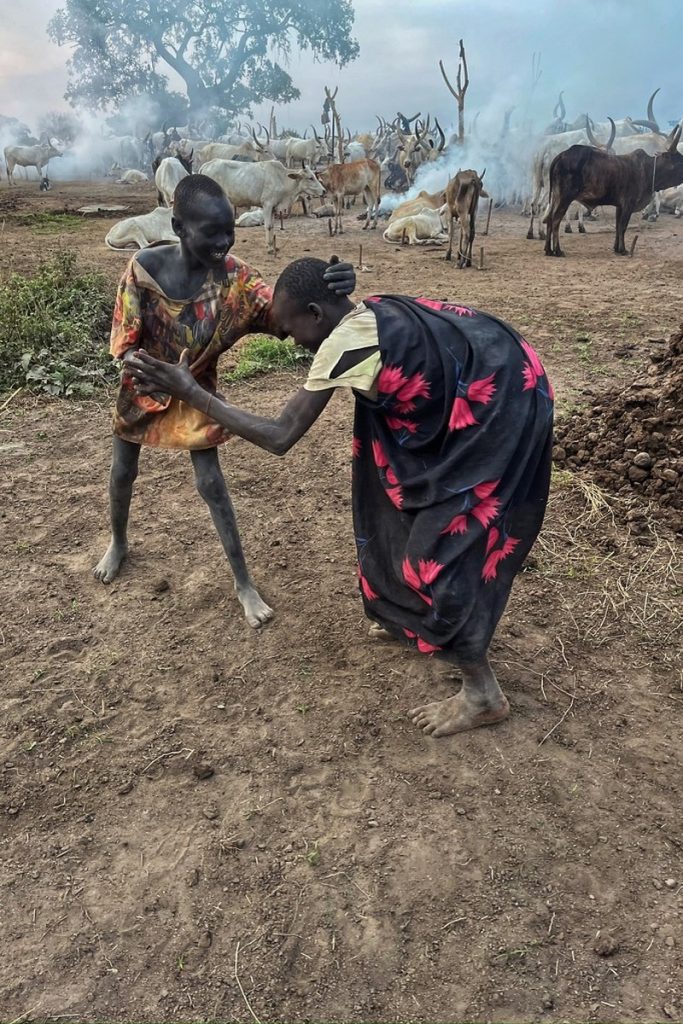
Boys and teenagers playfully wrestled with each other, infectious laughter in between tasks.
I kept a curious eye out for one of the most enlightening and eye-opening traditions since the Mundari Tribe went viral across travel social media: the cow piss showering ritual.
The Orange Hair Tradition: Cow Urine Rituals
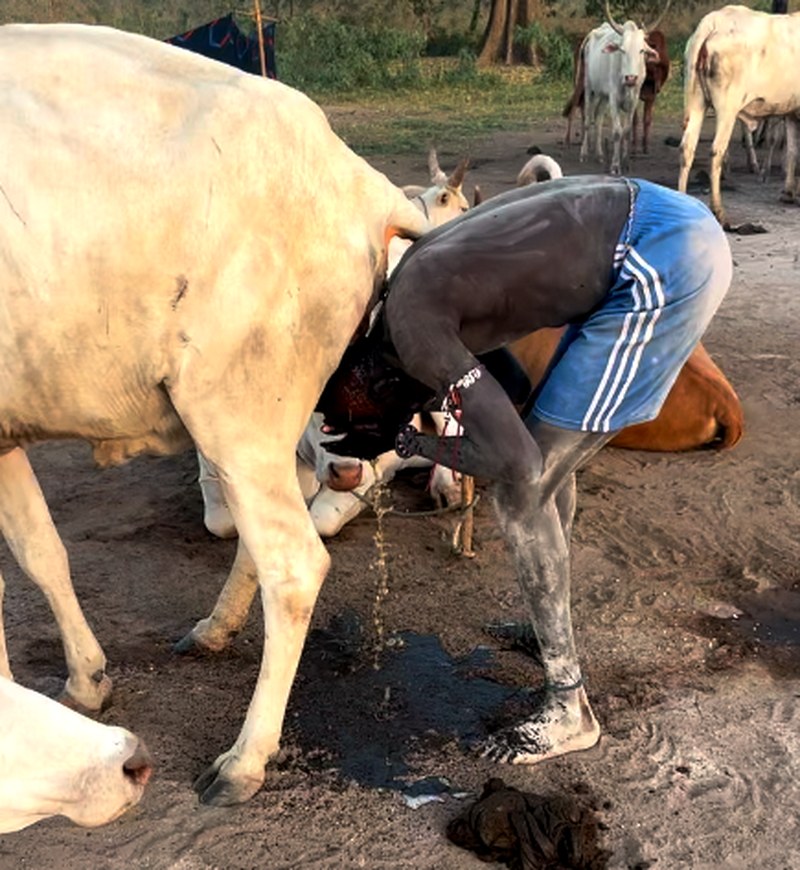
Many Mundari men and women in South Sudan have strikingly bright orange or reddish-golden hair due to a ritual of showering with cow urine drawn straight from the cow’s vulva.
I didn’t get to see this phenomenon until the morning, as that’s when they tend to shower (the cow tends to pee more when she first wakes up).
Now, this might seem weird to some folk, but it’s better to be curious than judgmental in times like these. In the harsh savannah, cow urine, along with burnt dung, acts as an effective natural repellent, keeping parasitic insects and mosquitoes away.
According to their local vet, the ammonia in cow urine acts as a natural antiseptic, helping to prevent infections and clean the skin, while the orange hair symbolises wealth and identity. I was offered a cow piss shower by a man named Jada, my favourite in the group, a mischievous, deaf person with an infectious laugh who dragged me around, showing me the day-to-day rituals of the Mundari.
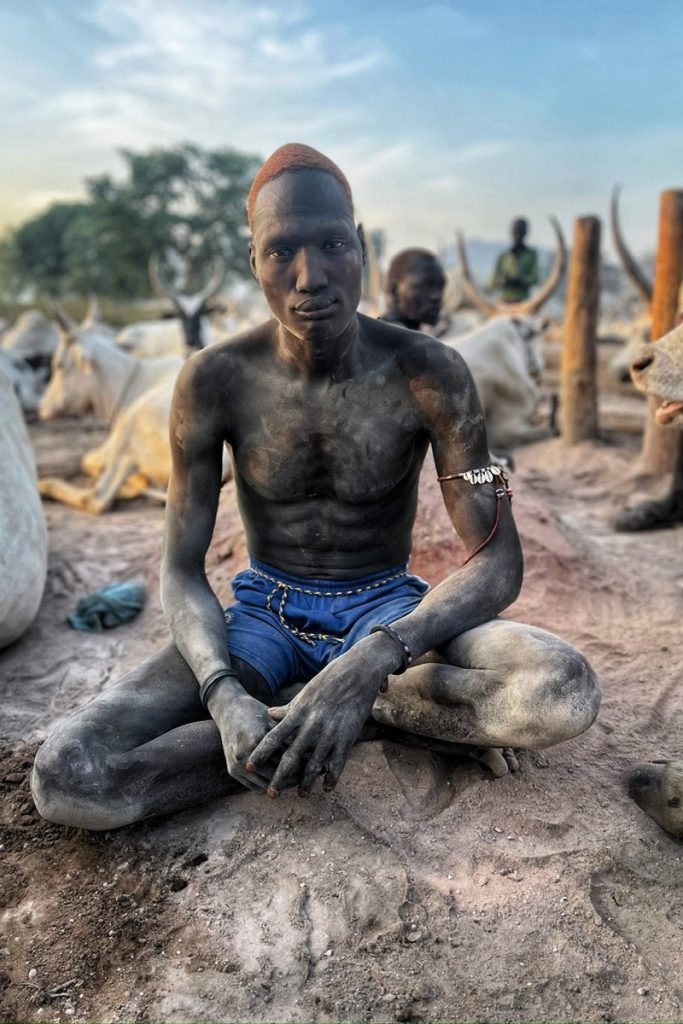
I felt honoured by the proposition, but I guess I’m not as adventurous as I like to think I am, and politely declined! The Mundari had invented their own sign language for him, and I tried my best to pick some up as we bonded every night he returned.
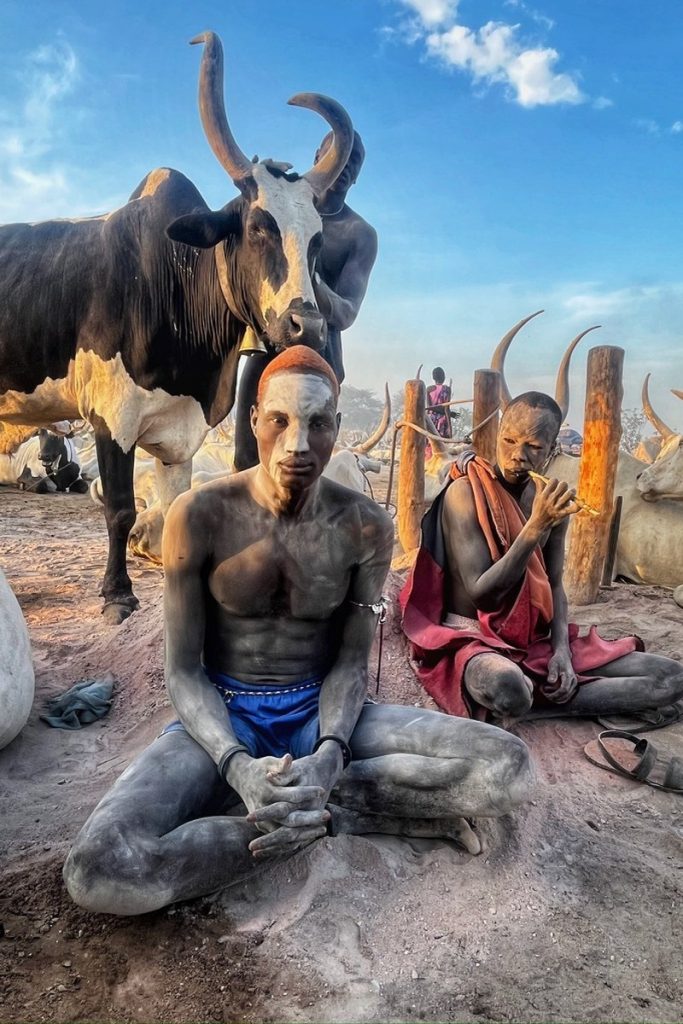
One young lad stuck his head *right* in there, running late, and the cow hadn’t peed yet.
Daily Life Among the Mundari
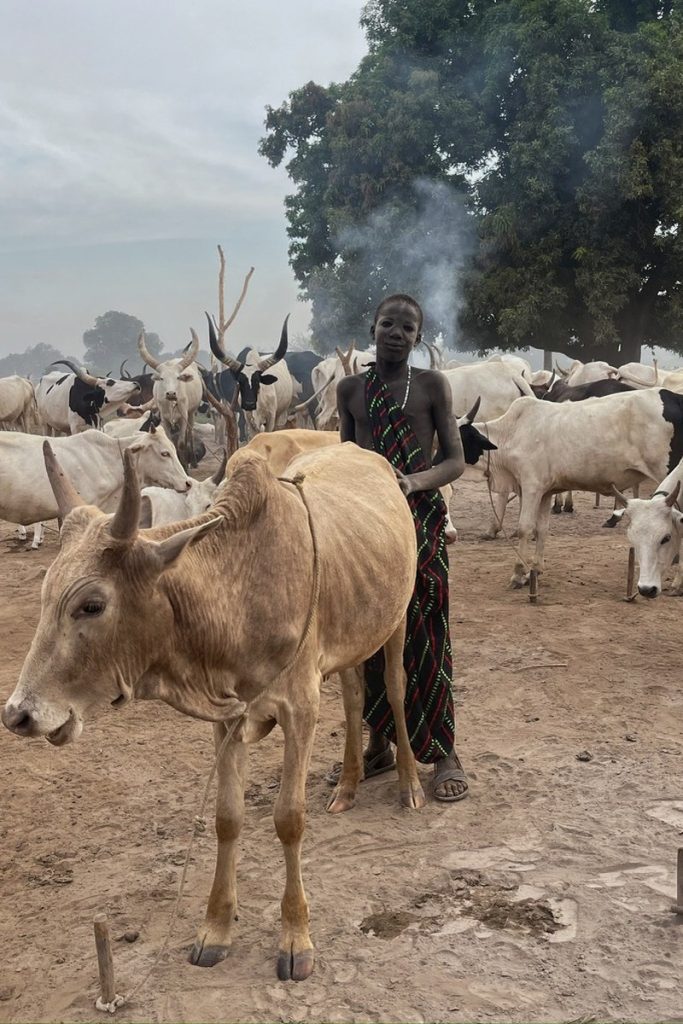
The rhythm of Mundari life revolves almost entirely around the cattle. Days start early and follow a simple, demanding cycle shaped by the herd’s needs.
After breakfast and a shower, the camp grows quiet. Only the older men, women, small children, and a few teenagers remain behind. The women tend to household tasks such as preparing food, fetching water from the Nile, mending shelters, and caring for the youngest.
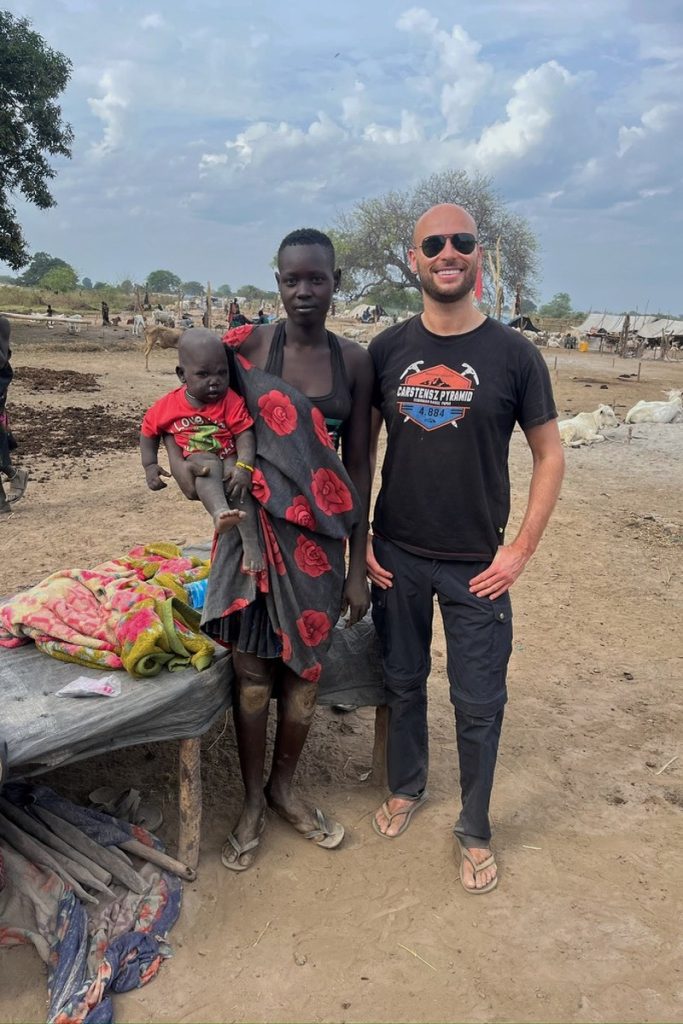
And a few hours before the brutal South Sudanese sun sets, the Mundari return.
You hear them long before you see them: the deep bells around the lead cows, the herders’ shouts, the lowing of hundreds of animals. The men and boys return dusty, tired, and proud, guiding the herd back into the camp’s smoky circle for the night.
Suddenly, the calm space comes alive with energy.
Cow dung is collected and piled for the evening fires. The wrestling matches break out again, playful but competitive, as the boys burn off energy and show off for each other (and any guests).
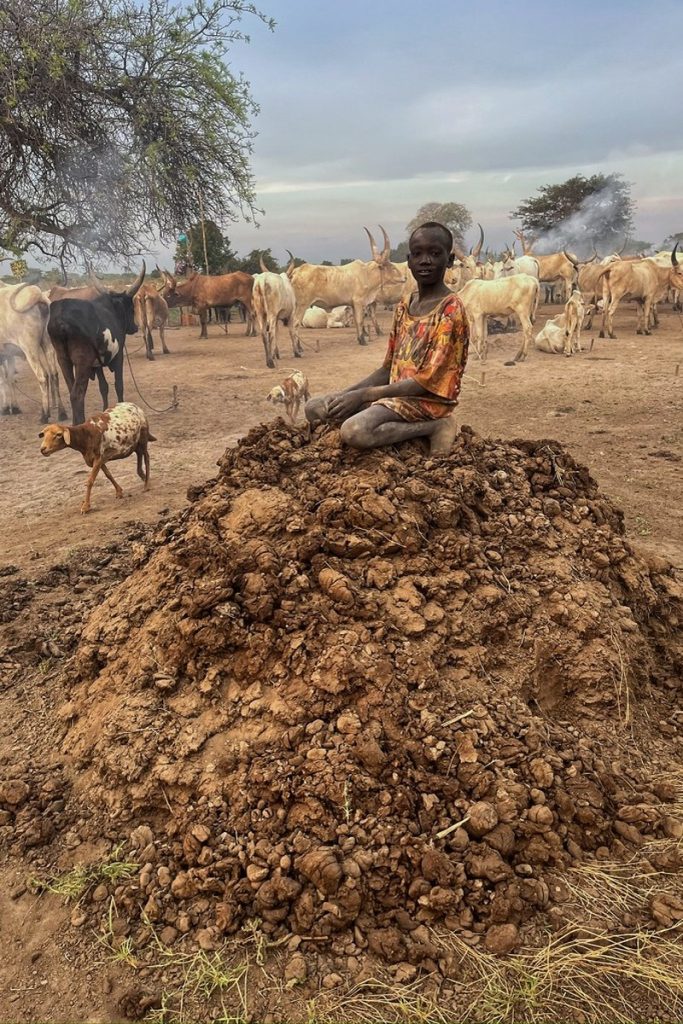
The cattle are milked, inspected, and settled close by for the night, their massive horns silhouetted against the fading sky. Security is never far from anyone’s mind. The men keep weapons close, eyes scanning the perimeter even during these lively reunions.
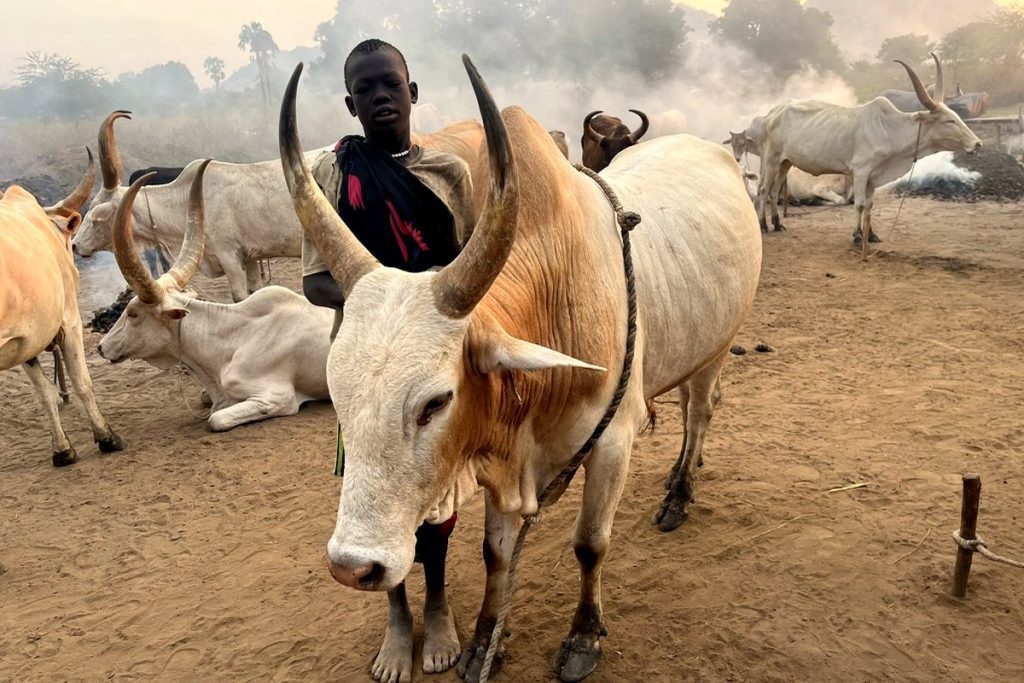
After Frederick’s brother’s recent loss to cattle thieves, the stakes feel very real. Yet the overall feeling is one of tight-knit, stoic resilience rather than tangible fear. By full dark, the camp settles again. It is incredibly sociable.
The Mundari’s Connection to Their Cattle
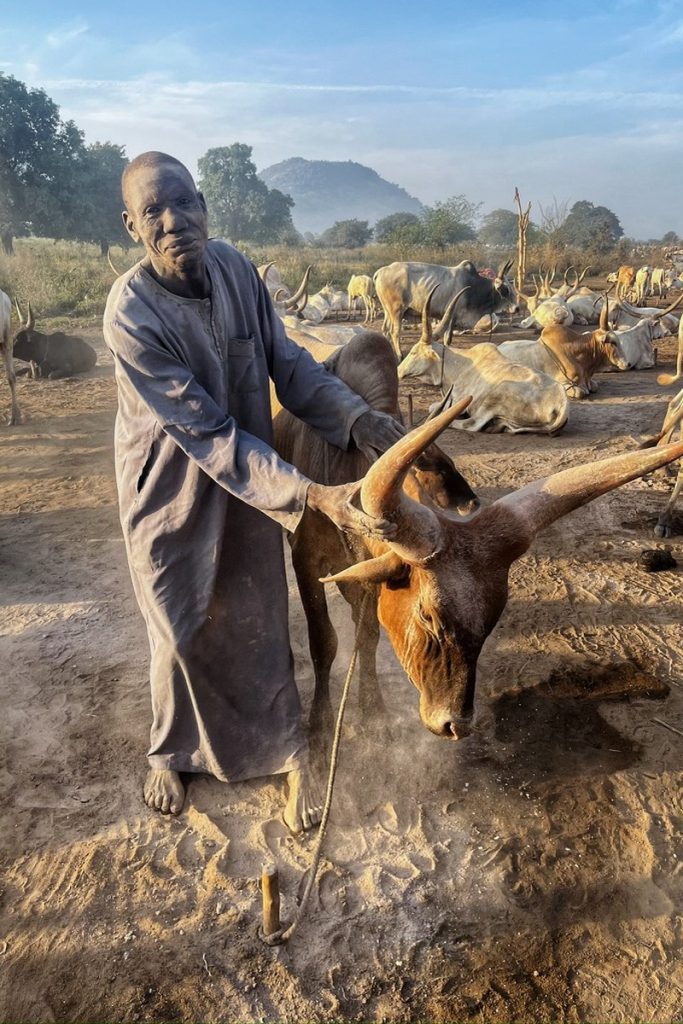
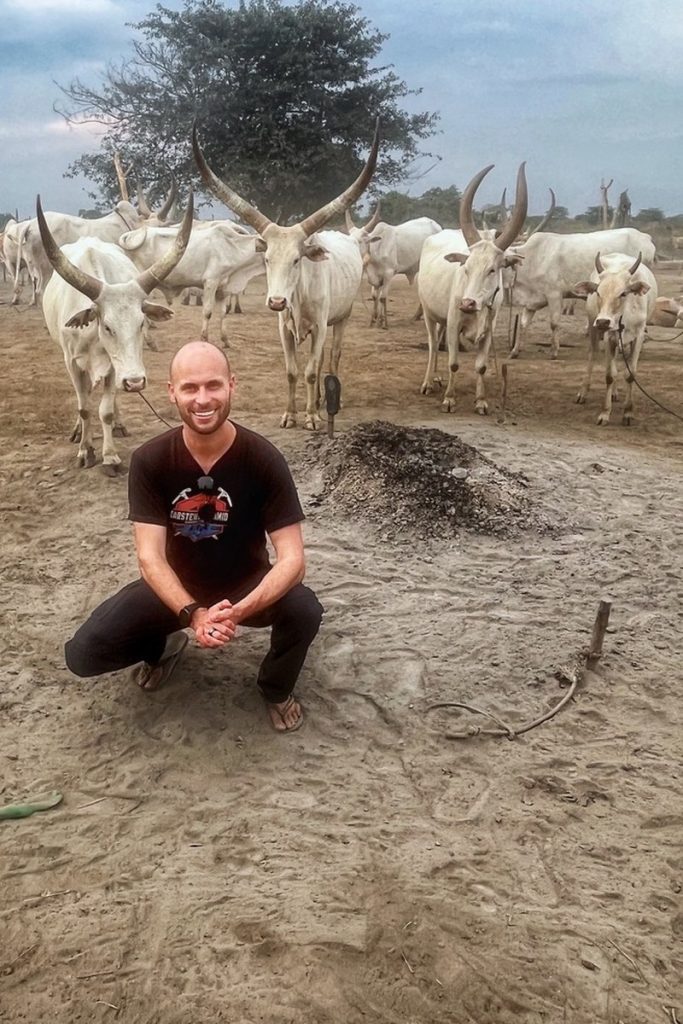
The long-horned cattle known as “Ankole-Watusi” are the pride of the Mundari tribe economically, socially, and spiritually.
Cattle are the foundation of the tribe’s economy, providing dairy for daily sustenance and hygiene from their urine showers. The cow dung acts as fertiliser for crops and also as a mosquito repellent at night once it’s been burned: something I appreciated, as those little parasites find my blood nectar of the Gods.
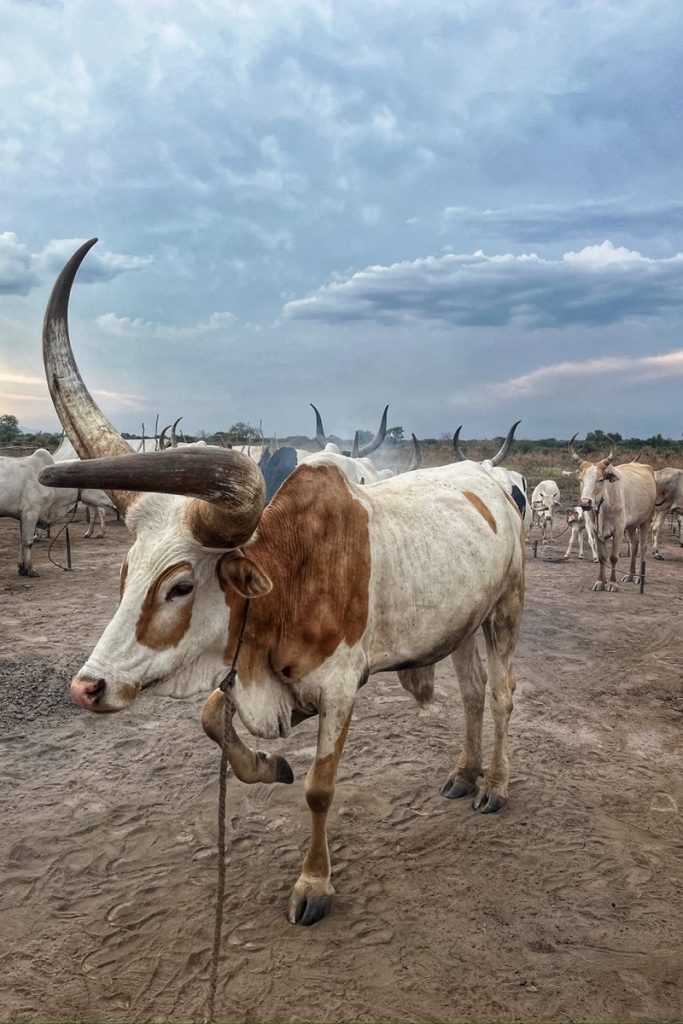
A Mundari’s wealth and economic security are measured primarily by the number and quality of their cattle, particularly the size and shape of their horn. In marriages, the bride price (paid by the groom’s family to the bride’s family) is measured in cattle and is among the largest economic transactions in Mundari society; it also raises the bride’s family’s social status.
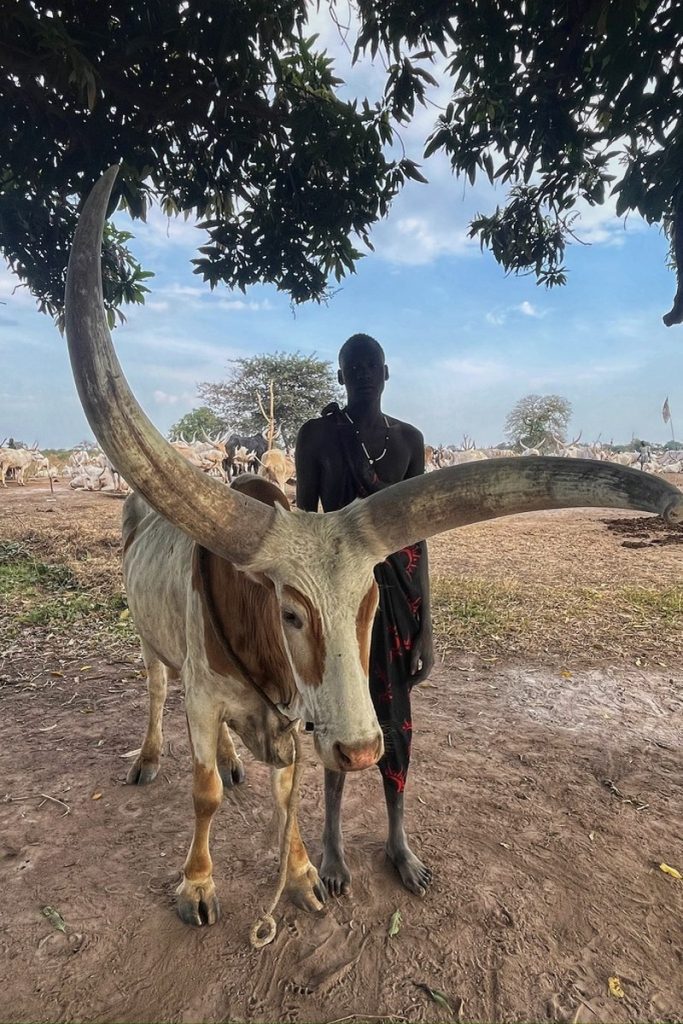
The Mundari blend Christianity with spiritualistic traditions in which symbols and cattle play central roles in life events such as births, deaths and marriages. Cattle act as mediators connecting the human and spiritual worlds; the spiritual sphere is accessed through cattle and practices involving ash from their dung fires, drawing heavily on ancestral traditions.
The Mundari Diet
The Mundari people’s diet is heavily dairy-centric, with the milk from their female cattle being the cornerstone of daily nutrition.
Milk, drunk warm when it’s barely left the cow’s udder, is a staple that provides protein, calcium, and hydration in a harsh, unforgiving environment.
As they don’t have fridges, every splash of dairy has to count, so the ladies of the tribe hang milk in traditional gourds from tree branches, resulting in a thick, sour, yoghurt-like consistency: think of a hybrid where yoghurt meets cottage cheese.
Crops such as maize, peanuts, and a grain called sorghum, often made into porridge, supplement the diet, as do fish from the nearby river and wild fruits. Meat isn’t common and is usually served at special events such as weddings and ceremonies, as well as for special guests.
The Mundari and the Sudan War: Surviving and Thriving
The elephant in the room that I bided my time to ask was: how the hell did the Mundari Tribe survive the South Sudanese War (2013-2018), especially considering they were persecuted for so long?
A younger man from the tribe in his 20s explained to me that he made it to Kenya as a refugee because he was too young to go to war… some of his family stayed behind to fight while others were displaced.
Mundari men are traditionally warriors. Older Mundari men spoke of a different generation’s experience. Traditionally, Mundari men have been responsible for protecting their families and cattle, and during Sudan’s long civil wars, many were drawn into the fighting. Others defended their communities closer to home, where cattle raiding and armed violence were an ever-present reality.
Already known for their toughness and no stranger to weapons (often AK-47s), the Mundari did what they have always done: survived. From what I could make out, this decision was due to pragmatism and not wanting to leave their homeland after years of persecution.
From Persecution to Pride
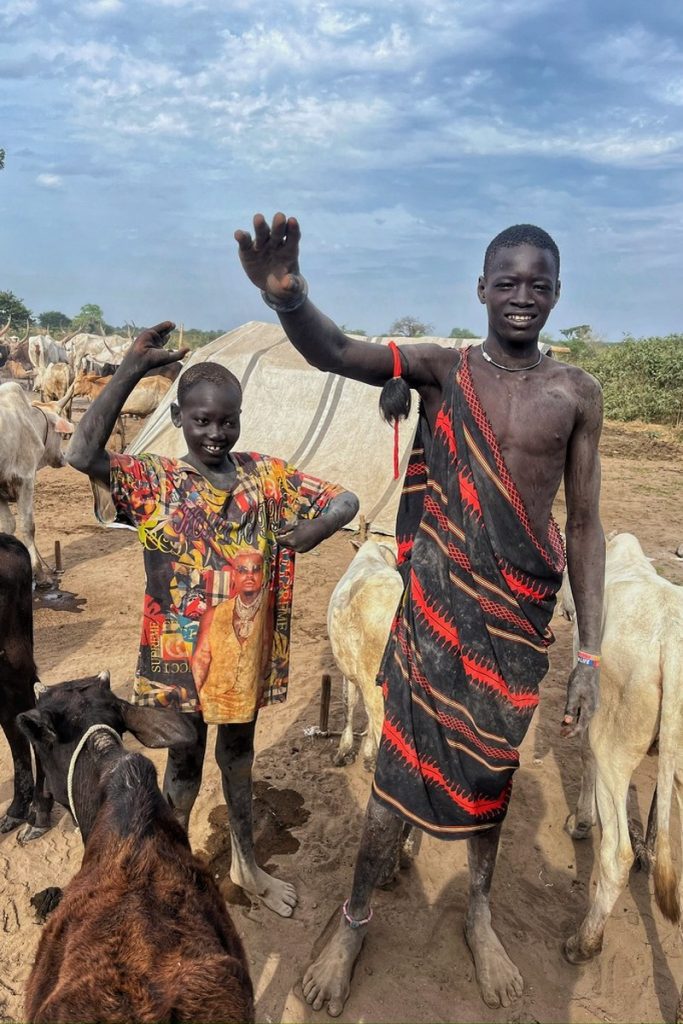
The Mundari were once persecuted in their own country. Propaganda had them down as harsh, violent, dirty people and tribespeople were often beaten in the city if they ventured out alone.
Thankfully, that’s changed, and they’re now seen as celebrities, and rightly so. They’re lovely and undoubtedly unique.
The local organiser, Frederick, was asked for photos by locals everywhere we stopped en route to the tribal base, as city people have now exchanged ignorance for reverence.
My Conclusion From The Youngest Country in The World
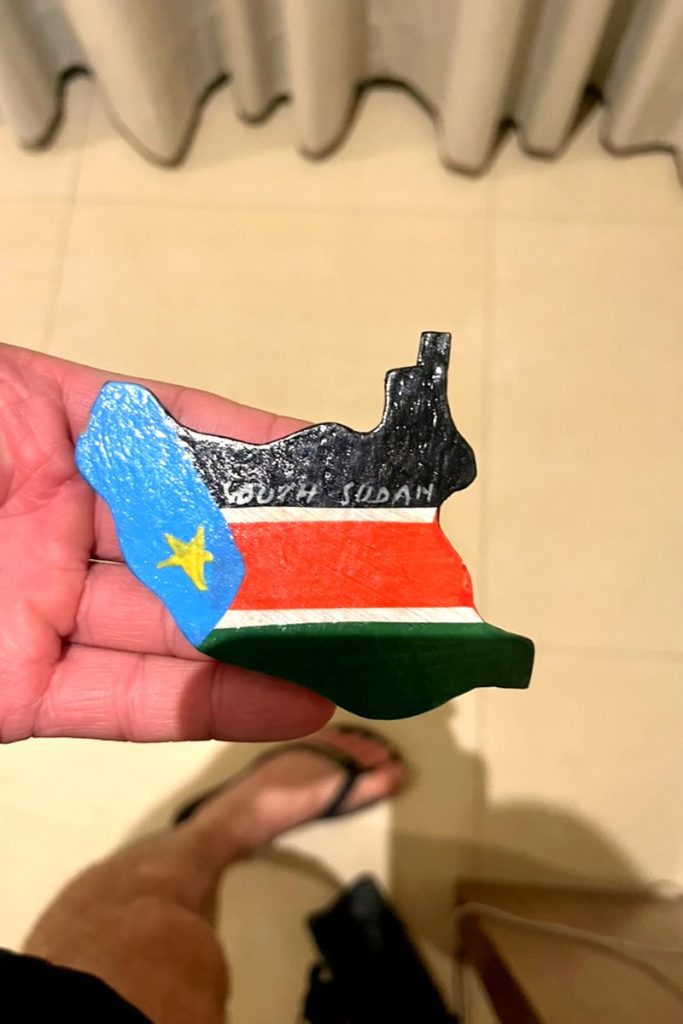
This made it one of my top ten travel experiences on the road: not only did I get to stay with the tallest tribe in the world, but South Sudan is also the youngest country in the world, at only 15 years old at the time of this published article.
I’ve now stayed with a decent number of tribes and am painfully aware that there is a spectrum in how much they want you there (or not).
Sometimes with these types of visits I worry it’s a potential human zoo and that maybe the local people don’t want yet another dickhead rocking up and sticking a lens in their faces.
I try to be respectful; luckily for me, the Mundari tribe stand tall metaphorically as well as physically, proud of their ancestral roots and their name: they are Mundari, and they want you to know it.
The curiosity was double-sided too, which put me at ease.
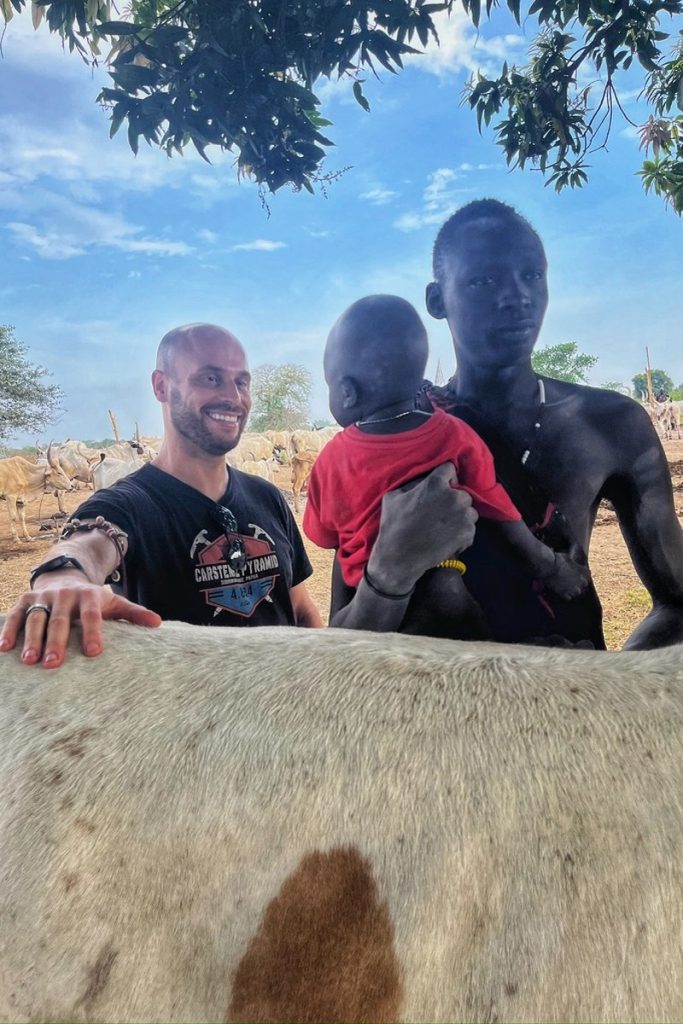
Guys were putting my arms next to theirs and hysterically laughing (they told me South Sudanese people have the darkest skin on earth, and I wasn’t going to argue: I was outnumbered and out-heighted by about a foot), and tribal ladies constantly studied my face like I was an alien off a ship, slowly stroking my beard and discussing how soft it was…
… one guy opined I was so white I should be sleeping with the goats.